

MATERIALS / OUTDOOR
LIVING WITH OUTDOOR FURNITURE.
Salt air and sun decide what lasts out here. Buy the material for the climate, not the catalogue.
MATERIALS / OUTDOOR
THE SHORT VERSION
For a coastal Queensland home, powder-coated aluminium, teak and solution-dyed outdoor fabric are the materials that last. Steel rusts, indoor fabric rots, and cheap foam holds water. Everything outdoors fades and weathers; the good materials do it gracefully. Hose it down, keep it dry when you can, and store cushions.
What it is
WHAT IS OUR OUTDOOR FURNITURE MADE OF?
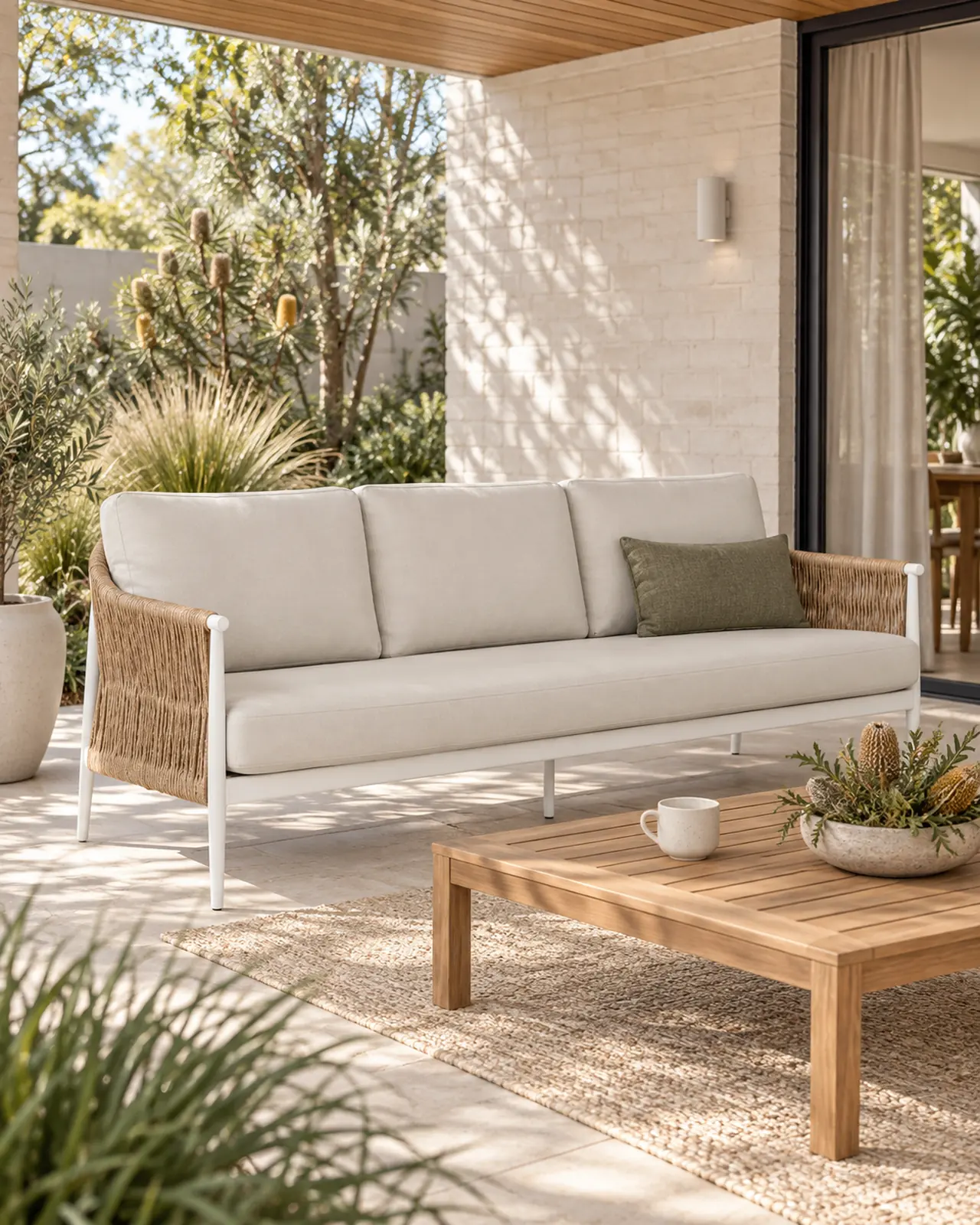
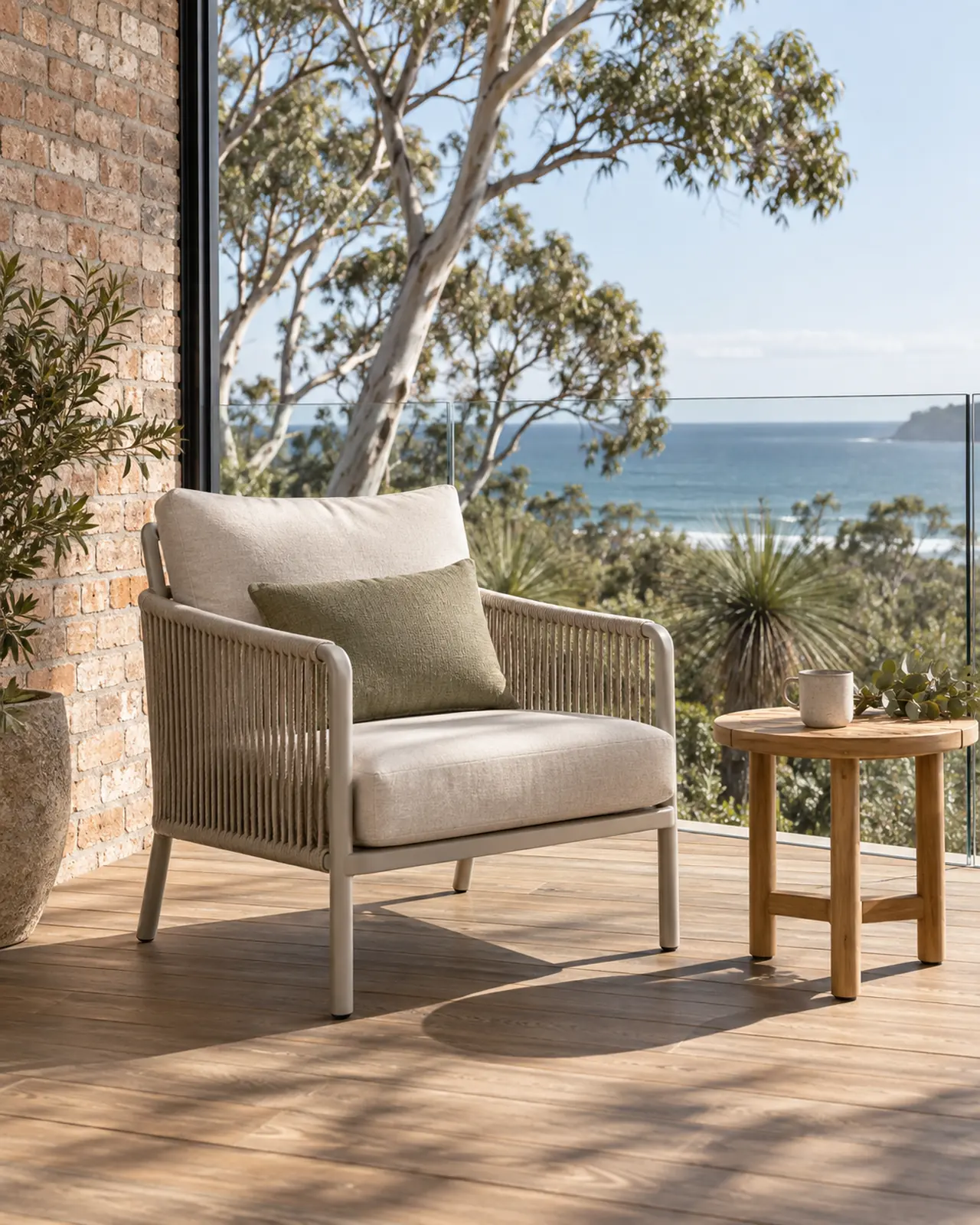
Frames are powder-coated aluminium, teak, or a mix of the two. Seats and backs are woven rope, synthetic wicker or sling mesh. Cushions are solution-dyed outdoor fabric over quick-dry foam. Tables are teak, aluminium, concrete composite or ceramic. A few pieces use stainless steel. Every material on this page has been chosen because it copes with sun, salt and a summer storm; the specifications for each piece list which ones it uses.
The honest bit
WHAT WILL HAPPEN ANYWAY
Everything fades.
Sun is stronger here than almost anywhere furniture is made. Quality fabric fades slowly and evenly; cheap fabric goes chalky in a season.
Teak silvers.
Left alone it turns soft grey within a year. Oil it if you want honey; leave it if you want driftwood.
Mould shows up.
Humidity plus shade plus a closed cover equals black spots, usually on cushions and rope. It cleans off, and it comes back if the conditions don't change.
Salt gets into everything.
It's harmless on aluminium and teak if rinsed off now and then; it's the enemy of steel.
Storms move things.
A light aluminium chair will travel. Stack, store or weight it before a cyclone warning.
Where it belongs
WHO EACH OUTDOOR MATERIAL SUITS
Kids.
Aluminium and woven synthetic: robust, hoseable, no splinters. Rope is fine but catches sunscreen; choose mid-tone.
Pets.
Woven synthetic and aluminium. Rope and sling can be clawed.
Instead of rope: a flat-woven synthetic seat. Outdoor →
Coastal, within sight of the sea.
Aluminium, teak, solution-dyed fabric. Not steel, even "rust-resistant" steel; salt finds the scratch.
Instead of steel: the same silhouette in aluminium. Outdoor →
Renting it out.
Aluminium frames, woven synthetic seats, quick-dry foam in mid tones, and no loose cushions you'd miss. Guests leave cushions in the rain.
Instead of pale cushions: charcoal or olive solution-dyed fabric. Outdoor →
Entertainers.
Teak and rope earn their place here. Keep a cover for the table and a dry box for the cushions.
MATERIALS / OUTDOOR
HOW TO CLEAN OUTDOOR FURNITURE
The routine for everything outdoors. Hose down monthly, or after a salty or dusty spell; a soft brush and mild soapy water for grime, rinse, and let it dry in the open. Brush off leaves and bird droppings promptly; both stain if left. Use breathable covers, never plastic sheeting, and only on dry furniture. Stack or store lightweight pieces before storms. Never pressure-wash timber, rope or fabric; it drives water in and lifts fibres.
Powder-coated aluminium
- What it is.
- Aluminium frames with a baked-on powder coat. Light, rustproof, and the workhorse of coastal outdoor furniture.
- What happens.
- The coat chalks very slowly in full sun over years. A deep scratch shows the silver metal beneath but won't rust. Salt film dulls it until rinsed.
- Clean.
- Hose, mild soap, soft cloth, rinse. A car polish once a year restores the sheen on darker colours.
- Don't.
- Don't use abrasive pads or solvents; they take the coat off. Don't leave a wet pale cushion on a dark frame for weeks; it can leave a tide mark.
- Normal vs not.
- Slight chalking and salt film are normal. Bubbling or peeling powder coat without impact is not: send us a photo.
Teak, outdoors
Teak is covered in full in Living with Timber, including how it silvers, how to keep it honey, and what not to do to it. The one thing worth repeating here: never leave a non-breathable cover on teak in humid weather.
Rope and cord
- What it is.
- Woven polyolefin or polyester cord over an aluminium frame. Soft to sit on, sculptural, and the relaxed end of outdoor.
- What happens.
- Holds dust and pollen in the weave; shows mould in humid shade; catches sunscreen and tanning oil; fades a little over years. Quality rope doesn't stretch; cheap rope does.
- Clean.
- Vacuum the weave, then a soft brush with mild soapy water, rinse, and dry in sun. For mould, a diluted white vinegar solution scrubbed gently, rinsed well. Sunscreen marks need mild soap soon after; they set.
- Don't.
- Don't bleach; it weakens the fibre. Don't pressure-wash. Don't leave it under a tree in the wet season without a breathable cover.
- Normal vs not.
- Mild fading, dust in the weave and occasional mould are normal. Rope sagging or unravelling from the frame is not: send us a photo.
Woven synthetic (outdoor wicker)
- What it is.
- Flat or round synthetic fibre woven over an aluminium frame. Reads as rattan, behaves like plastic. The easiest outdoor material to own.
- What happens.
- Almost nothing for years. Very slow fading. Can go brittle after a decade of full sun.
- Clean.
- Hose, soft brush, mild soap, rinse. Vacuum the weave first if it's holding dust.
- Don't.
- Don't use solvents. Don't stand on it.
- Normal vs not.
- Slow fading is normal. Strands cracking or snapping within the warranty period is not: send us a photo.
Outdoor fabric and sling mesh
- What it is.
- Solution-dyed acrylic (the colour runs through the fibre) or an olefin or polyester weave for cushions and covers; PVC-coated polyester mesh for sling seats. Made for UV and water.
- What happens.
- Fades slowly and evenly. Holds dust and pollen. Shows mould in shade. Water beads off new fabric and stops beading after a couple of seasons as the finish wears.
- Clean.
- Brush off dry dirt, then mild soapy water and a soft brush, rinse thoroughly, air dry. Most cushion covers with zips are cold machine washable; check the label and dry in shade. For mould, a diluted bleach solution on solution-dyed acrylic only (it's colourfast), rinsed well; never on other fabrics. Re-apply a fabric protector spray every year or two once water stops beading.
- Don't.
- Don't hot wash or tumble dry. Don't fold cushions wet into a box. Don't use bleach on anything that isn't solution-dyed acrylic.
- Normal vs not.
- Even fading, dust and occasional mould are normal. Fabric splitting, rotting or fading in patches within the warranty period is not: send us a photo.
Cushions and foam
- What it is.
- Outdoor cushions are a cover over a core. The core is what matters: quick-dry reticulated foam lets water drain through and dries in hours; ordinary foam or fibre fill holds water for days and goes musty.
- What happens.
- Even quick-dry cushions get soaked in a storm and need standing on edge to drain. Covers fade. Left flat and wet for a week, anything moulds.
- Clean.
- Covers as above. Cores: hose through, stand on edge in sun until fully dry, never put a damp core back in a cover. A mouldy core that doesn't clear with hosing and sun is finished; replace it.
- Don't.
- Don't store cushions in a sealed plastic tub; it sweats. Use a ventilated dry box.
- Normal vs not.
- Fading and needing to dry after rain are normal. A cushion that stays wet for days, or a core that crumbles, is not: send us a photo.
Stainless steel
- What it is.
- Marine-grade (316) stainless fittings and, on a few pieces, frames. Strong, and better than any other steel by the sea, but not immune.
- What happens.
- "Tea staining": a brown surface film in salt air that looks like rust and isn't. Comes off; comes back.
- Clean.
- Rinse fresh water monthly by the sea. A stainless cleaner or a paste of bicarb and water on tea staining, wiped along the grain, rinsed.
- Don't.
- Don't use steel wool or chlorine products; both cause real rust.
- Normal vs not.
- Light tea staining in a coastal position is normal. Pitting or structural rust is not: send us a photo.
Concrete, composite and ceramic tables
Covered in Living with Stone. Outdoors, re-seal concrete yearly, lift pots off the surface between rains, and expect moss in shaded travertine.
Outdoor rugs
Covered in Living with Rugs. The short version: hose it, dry it flat, don't lay it back down damp.
Covers and storage
A cover is only good if it breathes and the furniture under it is dry. Fitted breathable covers, on dry furniture, in dry weather. Plastic sheeting or a tarp traps moisture and grows mould underneath within a fortnight in a Queensland summer. Cushions live in a ventilated dry box between uses. Before a cyclone or storm warning, stack aluminium, bring cushions in, and weight or store anything light.
MATERIALS / OUTDOOR
IS THIS NORMAL?
- Fabric a shade lighter after a year: normal.
- Teak gone grey: normal, and reversible with oil.
- Black spots on cushions or rope after a wet month: normal mould. Clean, dry, improve airflow.
- Brown film on stainless fittings by the sea: normal tea staining. Rinse and wipe.
- Salt dulling on aluminium: normal. Hose it.
- Powder coat bubbling, rope unravelling, foam that never dries, fabric rotting, or steel pitting: not normal. Send us a photo. Warranty →
Questions Worth Asking
FREQUENTLY ASKED
What's the best outdoor furniture for coastal Queensland?
Powder-coated aluminium or teak frames, woven synthetic or rope seats, and solution-dyed acrylic cushions over quick-dry foam. Avoid steel, even coated, within a few kilometres of the surf.
How do I clean outdoor cushions?
Brush off dirt, wash covers cold and dry in shade, hose the cores through and stand them on edge in sun until dry. Never put a damp core back in its cover.
How do I stop mould on outdoor furniture?
Airflow, sun and dryness. Don't cover wet furniture, don't use plastic covers, store cushions in a ventilated box, and clean early with mild soap or diluted vinegar before it spreads.
Should I cover outdoor furniture?
Yes, with a breathable fitted cover on dry furniture. A plastic tarp does more harm than no cover at all in a humid climate.
Does aluminium outdoor furniture rust?
No. Aluminium doesn't rust. Its powder coat can chalk or scratch over years, but the frame underneath stays sound by the sea for decades.
BUYING FOR A DECK BY THE SEA?
Tell us how close to the water, how much sun, and who sits out there. We'll pick materials that survive it. Complimentary.
BOOK A CONSULTATION