

Curtains & Blinds · Venetian Blinds
Venetian blinds
Tiltable slats. Precise light, precise privacy.
What it is
Venetian blinds
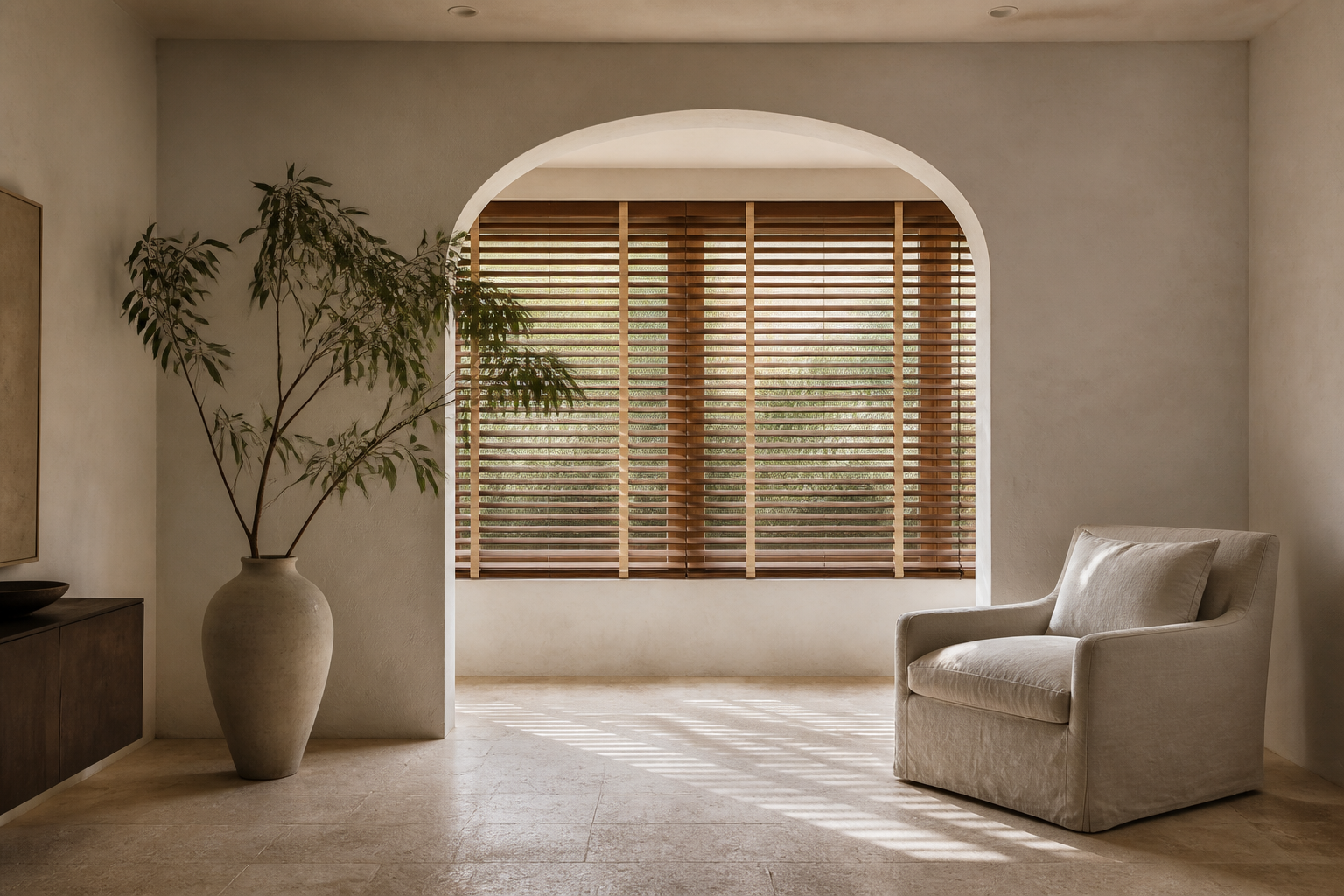
A Venetian is a stack of horizontal slats that tilt on a cord. Two materials, and the slat width sets the read: aluminium in 25mm or 50mm, timber in 50mm or 63mm. Aluminium is thinner, cooler and works well in wet rooms; timber has warmth and body and belongs in living areas. Cut-outs around window handles and locks are available so the blind sits flush inside a reveal without the hardware fouling.
The point of a Venetian is control. Tilt the slats to draw daylight up onto the ceiling, tilt them the other way to shut a street-facing room down for privacy, or lift the whole stack to clear the glass. No other blind reads and modulates light as finely.
The honest bit
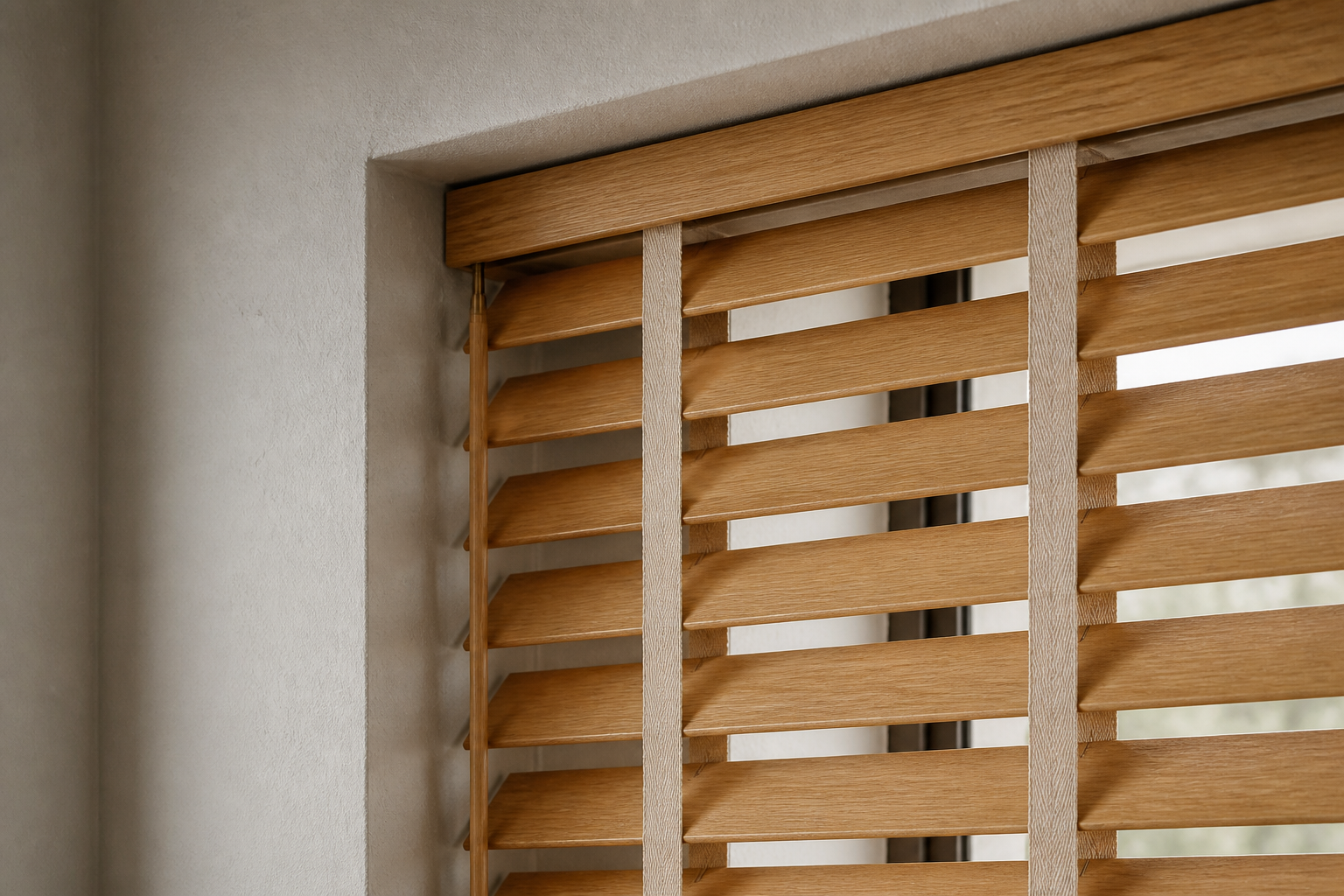
Even closed, the slat edges let light and sightline through
This is the honest limit. A Venetian tilted fully closed is not a solid panel: at the slat edges there are fine horizontal seams where a little light passes and, at close range, a little sightline. In daylight that's what makes the blind useful, because you can dial in the exact glare and privacy balance you want. At night in a room with a light on, someone standing close to the window from outside can still catch a horizontal glimpse through those seams. Excellent for daytime control; not a true dark-out or a full night-privacy answer on its own.
Where it works best
Wet rooms in aluminium, living rooms in timber
Venetians earn their place where control matters more than softness. Kitchens, bathrooms, laundries and coastal rooms get aluminium, which shrugs off humidity and splashes; living rooms and studies get timber, where the material warmth reads like joinery. Street-facing windows are where the tilt really pays: dial the daylight up onto the ceiling, dial it down for privacy, or lift the whole stack to clear the glass. Keep them out of bedrooms wanting a proper dark room.
Where it belongs
Who it suits, and who it doesn't
Who it suits
- Kitchens, bathrooms and laundries (aluminium) where humidity and splashes rule out fabric
- Living rooms and studies (timber) where warmth of material matters
- Street-facing windows that need day-in / day-out privacy dialled up and down
- Windows with handles or locks that need slat cut-outs to sit flush
Who it doesn't
- Bedrooms wanting a genuine dark room (choose a blockout curtain)
- Rooms that want a soft fabric read (a Roman or a curtain fits better)
- Very tall windows where the stack of slats at the top eats headroom
- Wet rooms in timber (aluminium is the right specification in a bathroom)
Questions Worth Asking
Frequently asked
Aluminium or timber slats?
Timber has the warmth and reads like joinery, but it doesn't belong in a wet room. Aluminium is thinner, cooler and holds up in bathrooms, laundries and coastal rooms. In a living room we'd normally specify timber; in a bathroom we'd specify aluminium and not have the conversation twice.
25mm, 50mm or 63mm slats?
Slat width sets the visual weight. 25mm aluminium reads finer and more contemporary; 50mm reads more substantial. In timber, 50mm is the default and 63mm is a heavier, more traditional look. The wider the slat, the fewer slats across a window, which makes cleaning and stacking easier.
Can you cut around window handles?
Yes. Cut-outs are made in the slats around window handles, locks and casement fittings so the blind sits flush inside the reveal. It's a measure-day conversation because the cut-out geometry has to match your window.
Do Venetians work on tilt-and-turn or awning windows?
Face-fit outside the reveal is usually the answer, because the blind can't sit inside a reveal that opens inward. It costs a little more wall space either side, and the operation stays clean.
Next Step
Book a free measure & consultation
A 15-minute phone call first. Then, if it's a fit, we come and measure your venetian blinds and anything else you'd like specified at the same visit.
Book my free measure →