

Curtains & Blinds · Motorisation
Motorisation
Quiet, app or voice, and planned before the walls close.
What it is
Motorisation
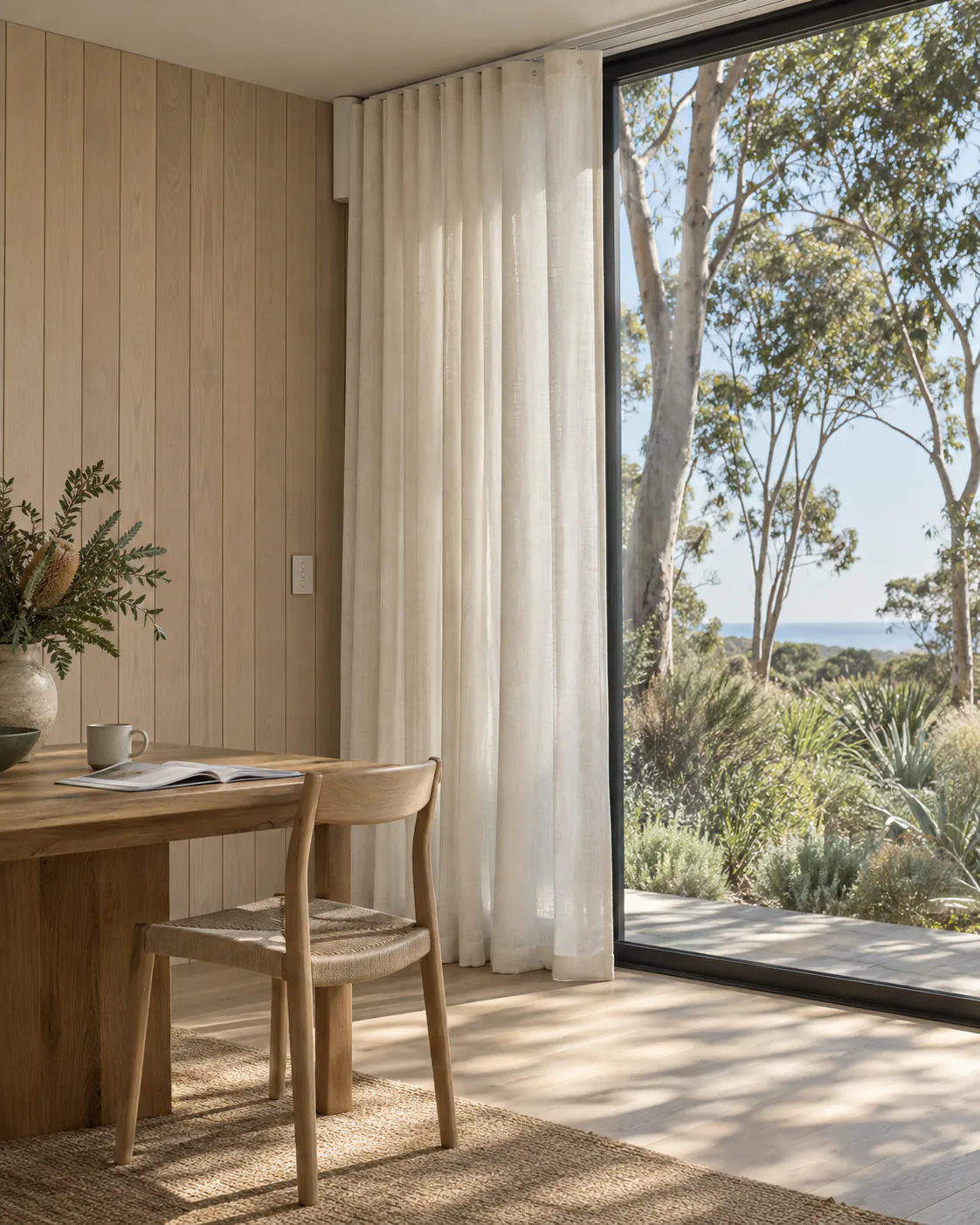
Motorisation is a motor that moves the curtain along its track, or turns the roller tube or tilts the slats on a blind, operated by remote, wall switch, app or voice. The fabric and header don't change; motorisation just adds the movement. It works across curtains (sheer, S-fold / wave, pinch pleat, reverse pleat) and blinds (roller, roman, venetian, panel glide).
Every motor needs power. There are two ways to get power to it, battery or hardwired, and that's the decision worth getting right before anything is built. Once the fabric is up and the plaster is closed, the choice narrows a long way.
The honest bit
Battery or hardwired: decide before the walls close
Battery motors run on a rechargeable lithium pack tucked into the track or tube. No electrician, no cable in the wall, easy to retrofit into a finished home or apartment. In exchange, they have less pulling power (so they suit lighter curtains and blinds), and the pack needs recharging every few months. Hardwired motors run off a 12V transformer or 240V mains: quieter, stronger, maintenance-free, the right pick for heavy or wide furnishings and any window you'll use every day. In exchange, an electrician makes the final connection, and the cable wants to go in before the plaster does. The honest line: if the walls are open, hardwire it. If the plaster is up and you'd rather not cut in, go battery. This is the call people wish they'd made earlier, because retrofitting a hardwired motor into a finished wall means either a visible cable or a battery motor anyway.
Where it works best
High, hard-to-reach, and windows you use every day
Motorisation earns its place where a cord is awkward or unsafe: stairwell voids, windows above benches, tall stacker doors, high-level fanlights. It also earns it where you're moving a lot of glass on one button: a bank of windows across a living room, a whole run of sheers behind a stacker, a bedroom on a sunset/sunrise schedule with a blockout closing itself. Sheers are the standout case because they get used daily, and a wall switch or app is quicker than reaching a wand every time. In a smart-home home, motorisation integrates with C-Bus, Somfy TaHoma, Control4, Google Home and Apple Home so the curtains sit inside the same routines as the lights.
Where it belongs
Who it suits, and who it doesn't
Who it suits
- New builds and renovations that can plan the cabling before plaster
- High, wide or hard-to-reach windows where a cord is awkward or unsafe
- Banks of windows and sheers that get used every day
- Smart-home households already running lighting and climate on a hub
- Families wanting cord-free child safety across every window
Who it doesn't
- Finished homes with heavy, wide furnishings where battery may underpower the run
- Small isolated windows used occasionally, where a wand or chain is simpler and cheaper
- Rentals where the wiring can't be altered and battery capacity is marginal
- Any spec where the motor and power path are treated as an afterthought at install
Questions Worth Asking
Frequently asked
Can any curtain or blind be motorised?
Effectively yes. Curtains motorise on the track, blinds motorise in the tube or headrail. Sheer, S-fold / wave, pinch pleat and reverse pleat curtains all take a motorised track; roller, roman, venetian and panel glide blinds all take motorised hardware. The header, fabric and stack don't change; the mechanism does.
Battery or hardwired: which should I choose?
If the walls are open, hardwire it: quieter, stronger, maintenance-free, and better for heavy or wide furnishings. If the plaster is closed and you'd rather not cut in, go battery: no electrician, easy retrofit, but lighter pulling power and a recharge every few months. Weight and daily use are the tie-breakers.
Do I need an electrician?
Hardwired motors need a licensed electrician for the final connection at the transformer or mains. Battery motors don't; the pack ships with the motor and you plug it into a USB-style charger every few months. We coordinate the electrician on the projects we run end to end.
Can I control the curtains from my phone or by voice?
Yes. Remote and wall switch are the simplest and most reliable. Add a small hub and you get app control and voice through Google Home or Apple Home. A full smart-home setup (C-Bus, Somfy TaHoma, Control4) folds the curtains into the same scenes as the lighting, climate and audio.
Will I see the motor?
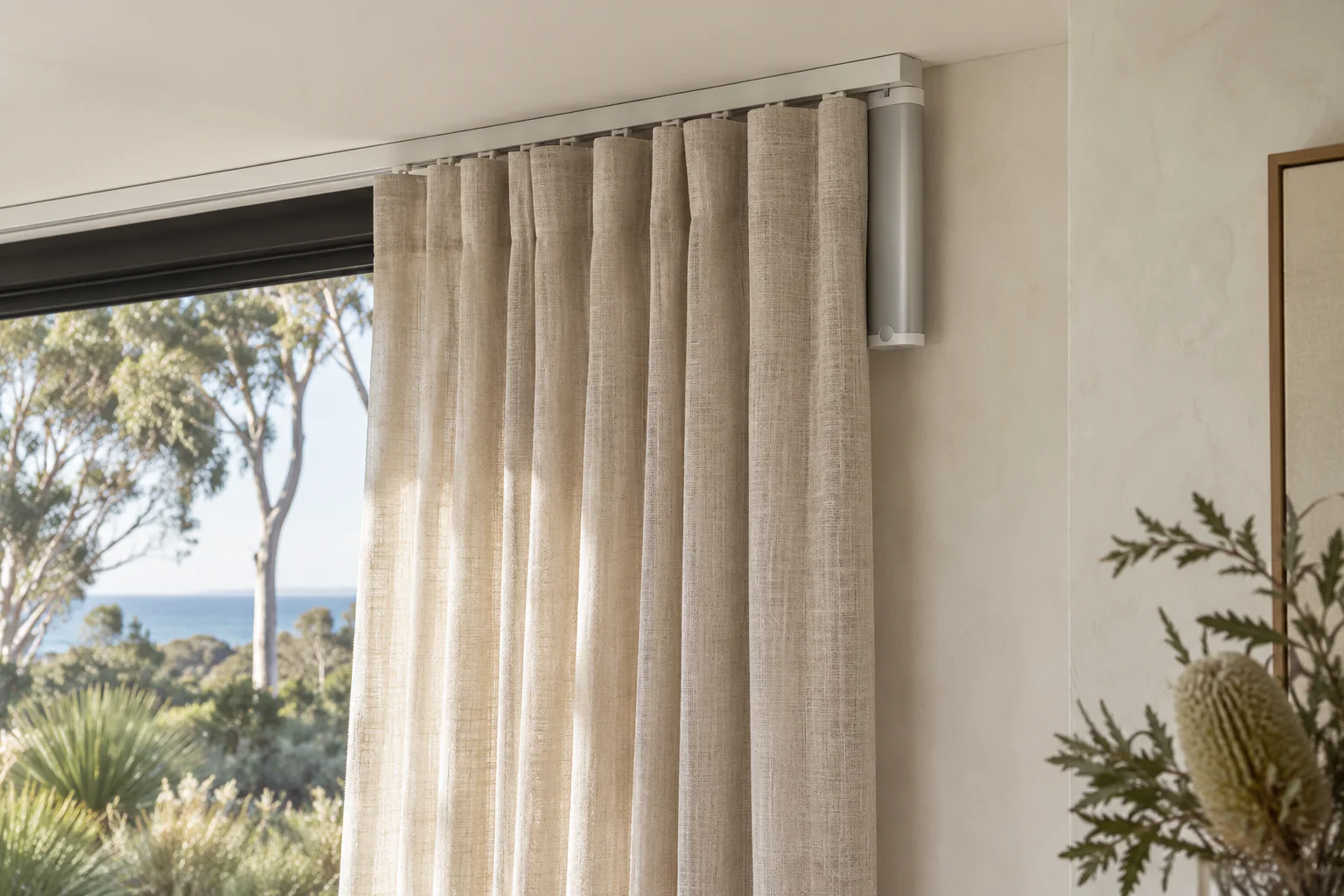
Rarely. On curtains the motor sits at the end of the track; on blinds it sits inside the roller tube or the headrail. In most installs it's hidden behind a pelmet, tucked into a recess or sitting inside the reveal, so the visible line is fabric only. On an exposed surface-mounted track without a pelmet, the motor end is visible as a slim housing.
Next Step
Book a free measure & consultation
A 15-minute phone call first. Then, if it's a fit, we come and measure your motorisation and anything else you'd like specified at the same visit.
Book my free measure →