

Curtains & Blinds · Pinch Pleat
Pinch pleat curtains
Tailored, formal, quietly traditional.
What it is
Pinch pleat curtains
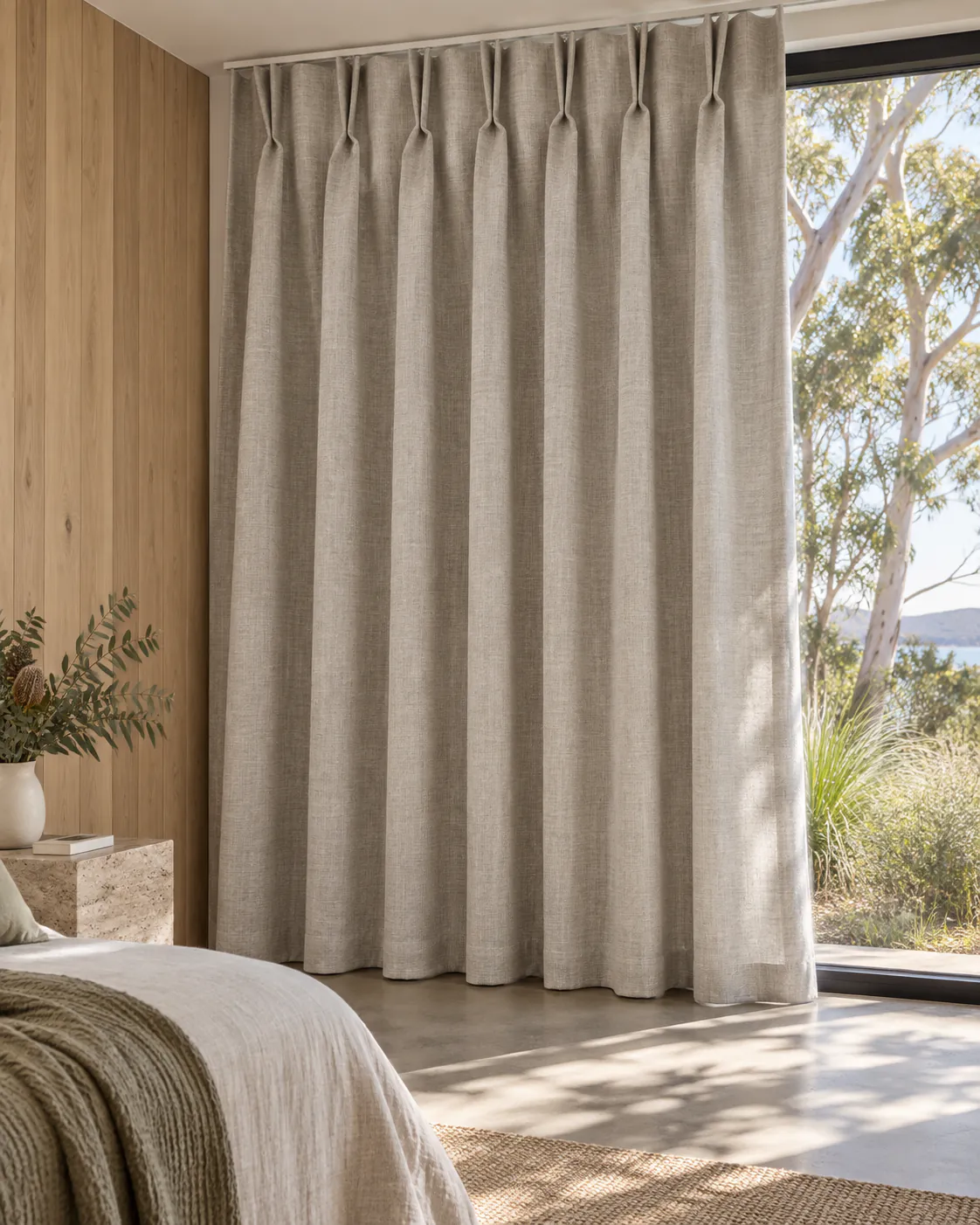
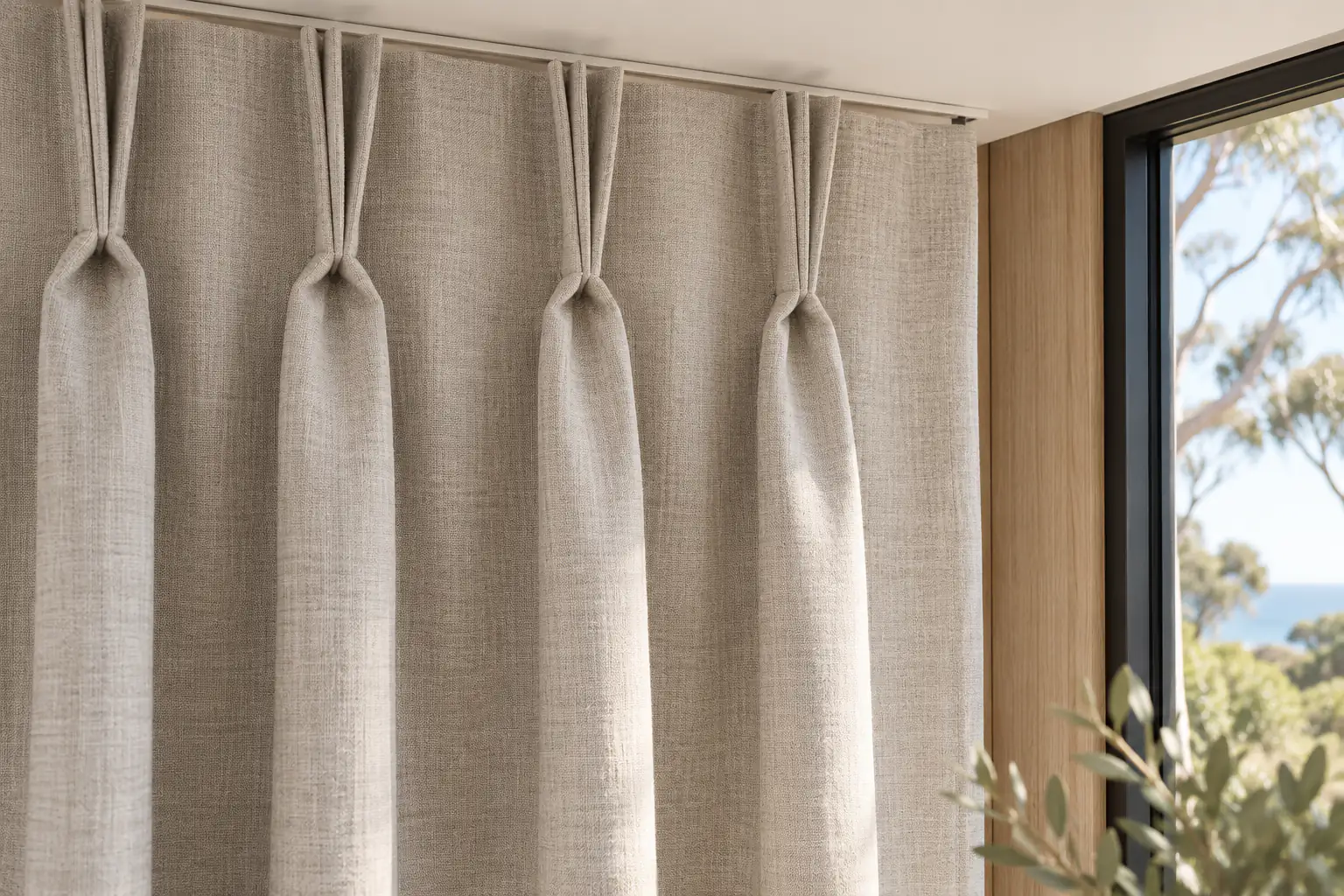
Pinch pleat is a curtain header stitched into fixed pinches at the top: double pinch (two folds per pleat) or triple pinch (three folds). It hangs from a standard curtain track, so the track can be recessed, pelmeted, or exposed depending on the room.
Pinch pleat uses roughly 2.2–2.5× the width of the window in fabric. That's less than wave and more than reverse pleat. The tailored top and structured body give the curtain a quieter, more traditional read than either.
The honest bit
Pinch pleat stacks wider than wave
This is the trade-off people actually feel. When a pinch-pleat curtain is drawn back, the fixed pleats bunch tighter than wave folds do, so the stacked curtain sits wider against the wall. More of your window disappears behind the open curtain than you might expect. On a window with generous stack space either side, that's fine. On a window that already runs close to the corner, the stack eats into the view. It's the reason we ask about stack space at the measure. Not because we're being pedantic, because pleat choice depends on it. The header itself does sit a touch deeper than a wave header too, but the stack is what you'll notice.
Where it works best
Formal rooms and traditional interiors
Pinch pleat is the right pick for formal and classic interiors where the curtain is meant to read as a considered object: dining rooms, master bedrooms, and living rooms in period or heritage homes. The pinched head sits well under a decorative rod and pelmet if you want that vocabulary. On tight modern joinery, high square-set openings, and coastal-contemporary rooms, the S-fold gives a cleaner read; on a bay or a single feature window, a Roman may be the better call.
Where it belongs
Who it suits, and who it doesn't
Who it suits
- Formal living rooms, dining rooms, hotel-style bedrooms
- Traditional and transitional interiors
- Standard curtain tracks, including recessed and pelmeted setups
- Rooms with wall space beside the window to absorb the stack
Who it doesn't
- Windows that already run close to the wall corner (the stack will cover glass)
- Very casual, resort-style interiors
- Rooms wanting a soft continuous drape, where wave / S-fold is the better choice
- Reveal-fit tracks, where the header depth needs a face-fitted install
Questions Worth Asking
Frequently asked
Double or triple pinch pleat: which should I choose?
Triple pinch is a fuller, more formal top; double pinch is a touch quieter and uses slightly less fabric. Same track, same drop, and only the header depth changes. We'd normally recommend triple for formal rooms and double for anything more relaxed.
Does pinch pleat need a special track?
No. Pinch pleat sits on a standard curtain track and works with pelmets, recessed tracks and exposed tracks alike. If the track has to disappear altogether, reverse pleat is a better choice than pinch.
How long should the curtain be?
Three options. Float (1–2cm above the floor, the cleanest look, best for daily use), kiss (just touching the floor, tailored and calm), or puddle (5–15cm of fabric on the floor, romantic and formal). We recommend based on the room, the traffic and how often pets or kids walk through.
Do pinch-pleat curtains need lining?
In Queensland, yes, on anything facing the sun. Our light is harsh and unlined face fabric fades and weakens faster than most people expect, particularly on west-facing glass. Lining is what protects the fabric you chose.
Next Step
Book a free measure & consultation
A 15-minute phone call first. Then, if it's a fit, we come and measure your pinch pleat curtains and anything else you'd like specified at the same visit.
Book my free measure →