




MATERIALS / STONE
LIVING WITH STONE.
Marble will etch. Travertine will fill with life. Buy them knowing that and you'll love them for decades.
MATERIALS / STONE
THE SHORT VERSION
Marble and travertine are natural, porous stones. Marble etches when anything acidic touches it, even with a sealer, so it suits careful households and dining rooms with coasters. Travertine is more forgiving and more relaxed. Both need re-sealing about once a year and cleaning with pH-neutral soap only. Every slab is unique.
What it is
WHAT KIND OF STONE IS THIS?
Marble (polished or honed), travertine, riverstone, concrete and cement composites, claylime and ceramic. Whether a piece arrives factory-sealed is in its specifications.
The word that matters is calcium. Marble and travertine are calcium carbonate, and calcium reacts with acid. Lemon, wine, vinegar, tomato and most cleaning sprays dissolve a tiny amount of the surface and leave a dull mark called an etch. A sealer slows staining (colour soaking in). It does nothing about etching (surface chemically dulled). Two different things, and most people learn the difference after the first lemon.
The honest bit
WHAT WILL HAPPEN ANYWAY
Marble will etch.
Not might. Will. The first one is a shock; by the tenth you've stopped noticing, and on honed stone you barely see them.
Stone will vary.
Veining, colour, the pattern of voids. The sample shows the family, not the slab.
Unfilled travertine collects crumbs.
The pits are the look. They're also where the biscuit goes.
Sealer wears off.
Water stops beading; that's your signal, about yearly.
It's heavy and brittle at the edges.
Don't sit on it, don't drag it, don't knock a cast-iron pot into the corner.
Where it belongs
WHO STONE SUITS, AND WHO IT DOESN'T
Kids.
Honed marble or filled travertine on a coffee table: fine, wipe it. Polished marble dining table with toddlers and orange juice: you'll be looking at etches.
Instead: honed travertine hides everything, or a sealed timber dining top with a marble side table for the look. Dining →Living →
Pets.
No issue. Cool stone is where the dog sleeps in summer.
Coastal.
Fine. Stone doesn't care about salt air. Outdoors it weathers and grows moss in travertine's pits; some people want that.
Renting it out.
Polished marble in a holiday let will be etched within a season and there's nothing a guest can do about it.
Instead: travertine, concrete composite, or a stone-look sintered top. Dining →
Entertainers.
Marble is made for this. Coasters on the table before the guests arrive; that's the whole discipline.
MATERIALS / STONE
HOW TO CLEAN A MARBLE TABLE TOP (AND EVERY OTHER STONE)
The routine for all stone. Wipe with a soft cloth and warm water or a pH-neutral stone soap, then dry. Blot spills straight away: wine, citrus, tomato, vinegar and cola etch; oil and coffee stain. Trivets under anything hot. Two people to move it, lifted, never dragged. Never vinegar, lemon, bleach, glass cleaner, bathroom spray, cream cleanser, scourers, or anything "multi-surface" that doesn't say "safe for natural stone".
Polished marble
- What it is.
- Marble buffed to a mirror shine. The formal end of our stone range, and the one that shows the most.
- What happens.
- Etches show clearly as dull spots against the shine. Fingerprints show. Scratches show.
- Clean.
- The routine above. Re-seal when water stops beading, usually yearly: clean, dry, apply a penetrating stone sealer, wipe off the excess, leave overnight.
- Don't.
- Don't let anything acidic touch it, even briefly. Don't try to polish out an etch yourself; on polished stone that's a professional re-polish.
- Normal vs not.
- Etch marks from acid, veining variation and slight tonal difference from the sample are normal. A crack through the top or a top that isn't flat is not: send us a photo, ideally at delivery.
Honed marble
- What it is.
- Marble with a matt, satin surface instead of a shine. Same stone, same chemistry, far more forgiving to look at. What we steer families toward.
- What happens.
- It still etches, but the mark is nearly invisible against a matt surface. Slight darkening where oils soak in over years.
- Clean.
- The routine above. Re-seal yearly. A marble polishing powder rubbed in with a damp cloth removes light etches at home.
- Don't.
- Don't use a polished-marble cleaner with gloss additives; it changes the finish.
- Normal vs not.
- Faint etches and a softly patinated surface over years are normal. Cracks and chips on arrival are not: send us a photo.
Travertine
- What it is.
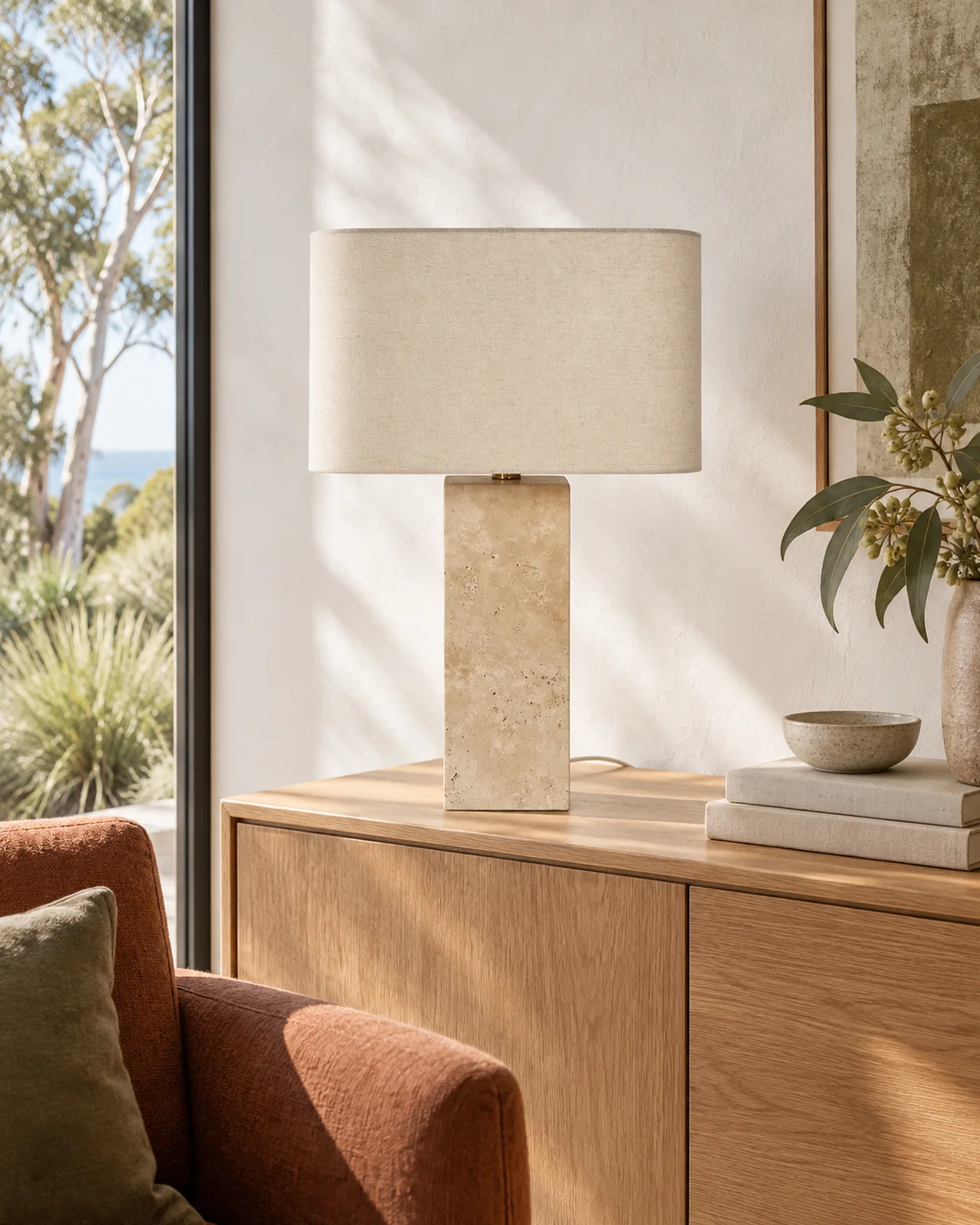
- A sedimentary limestone with natural pits and voids, sold filled (voids grouted flat) or unfilled (voids open). Calcium-based, so it etches, but the matt, mottled surface hides almost everything. The relaxed, organic end of our stone range.
- What happens.
- Unfilled travertine collects crumbs and dust in the pits. Filled travertine can lose a fill spot over years. Outdoors it weathers and grows moss.
- Clean.
- The routine above. A soft brush for the pits on unfilled stone. Re-seal yearly, or more often outdoors.
- Don't.
- Don't use a stiff brush on filled travertine; it can loosen fill. Don't pressure-wash it.
- Normal vs not.
- Pits, voids, colour banding and a lost fill spot are normal. A crack is not: send us a photo.
Riverstone
- What it is.
- Natural river-tumbled stone, usually in bowls, platters and small tables. Every piece a different shape and shade.
- What happens.
- Colour and shape variation is the point. Some surface porosity; oils can leave a shadow.
- Clean.
- Warm water, mild soap, dry. Seal if it's used for food or outdoors.
- Don't.
- Don't use it as a cutting surface. Don't put it in the dishwasher.
- Normal vs not.
- Variation and a faint shadow from oils are normal. Cracks are not: send us a photo.
Concrete and cement composite
- What it is.
- Cast concrete or a lighter cement-and-fibre composite, sealed at the factory. Porous, organic, and it takes on a perfectly imperfect look with use.
- What happens.
- Small pinholes and colour mottling are part of the cast. It can hairline at edges if knocked. Outdoors, water pooled under a pot leaves a temporary mark that fades over weeks. Acids etch it, same as marble.
- Clean.
- Warm damp cloth; mild soap if you like. Re-seal yearly, more often outdoors. Felt pads under anything you leave on it.
- Don't.
- Don't scrub hard; it compromises the sealer. Don't leave pots or vases sitting on it through wet weather. Don't sit or stand on it.
- Normal vs not.
- Pinholes, mottling, hairline surface crazing and temporary water marks are normal. A structural crack or a piece breaking off is not: send us a photo.
Claylime
- What it is.
- A hand-applied lime and clay finish over a base, matt and chalky, with visible trowel marks. Soft, organic, and softer than stone to the touch.
- What happens.
- Trowel marks and tonal variation are the finish. It marks with oils and acids more readily than stone, and it can chip at edges.
- Clean.
- Dry dust, or a barely damp cloth. Nothing else. Re-seal per the maker's guidance.
- Don't.
- Don't use any cleaner. Don't put wet glasses on it without a coaster.
- Normal vs not.
- Variation, faint marks and a soft patina are normal. Chunks lifting or the finish powdering off are not: send us a photo.
Ceramic and glazed stoneware
- What it is.
- Fired clay with a glaze, used for side tables, stools and vessels. Non-porous where glazed; the unglazed base is porous.
- What happens.
- Crazing (fine crackle in the glaze) can appear over years and is a feature of many glazes. Chips at edges if knocked. The unglazed foot can mark a timber floor if wet.
- Clean.
- Warm water, mild soap, dry. Felt pads under the foot.
- Don't.
- Don't use abrasive pads on a glossy glaze. Don't leave it standing in water outdoors.
- Normal vs not.
- Glaze variation and crazing are normal. Cracks through the body are not: send us a photo.
Sintered stone and porcelain
- What it is.
- A manufactured surface fired at very high temperature. Looks like marble, behaves like nothing else: doesn't etch, doesn't stain, doesn't need sealing.
- What happens.
- Very little. Edges can chip on heavy impact.
- Clean.
- Anything mild. Warm soapy water and dry.
- Don't.
- Don't drop cast iron on the edge.
- Normal vs not.
- Slight pattern repeat across a large top is normal. Chips on arrival are not: send us a photo.
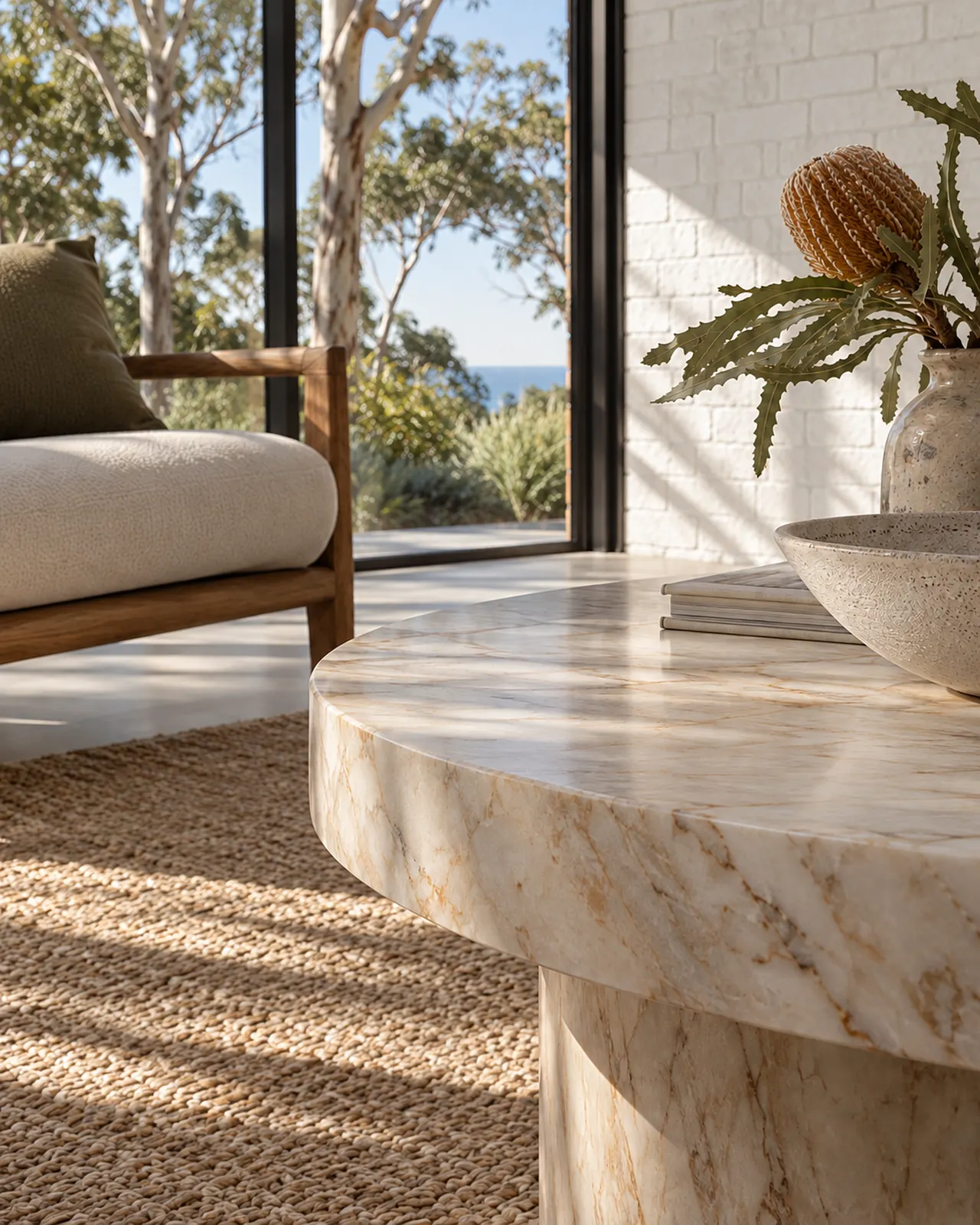
Travertine vs marble
Both are calcium stones and both etch. Marble is denser, takes a polish, and sits at the formal end; every etch shows on a polished surface. Travertine is pitted, matt and relaxed; its surface hides etches, crumbs and life. If you have young kids, a holiday house, or you don't want to think about coasters, travertine. If you want the veined, elegant look and you'll use coasters, honed marble. Polished marble is for careful households and rooms where wine stays on the table.
MATERIALS / STONE
IS THIS NORMAL?
- Dull ring where a glass sat: normal etching. Coasters from now on.
- Veining or colour different from the photo: normal. No two slabs match.
- Small pits or holes in travertine: normal. That's what travertine is.
- Water no longer beading after a year: normal. Time to re-seal.
- A crack through the top, a chip on delivery, or a top that isn't flat: not normal. Send us a photo, ideally at delivery. Warranty →
Questions Worth Asking
FREQUENTLY ASKED
Do marble tables stain?
They stain if oil or coffee sits on unsealed stone, and they etch from acid regardless of sealing. Seal yearly, wipe spills fast, and use coasters. Honed marble hides both far better than polished.
Are marble dining tables durable?
Structurally, yes; a marble top outlasts most of the house. The surface is the delicate part. It scratches and etches, and it's brittle at the edges. Durable and precious at the same time.
Can a marble table go outside?
It can, under cover, and it will weather: dulling, etching from rain, moss in the shade. Travertine and concrete composite are the stones designed for outdoors.
How often should I seal a marble table top?
About once a year. When water stops beading and starts soaking in, it's due.
How do I remove etching from marble?
On honed marble, a marble polishing powder worked in with a damp cloth. On polished marble, a professional re-polish. Prevention is coasters.
Also in the library
MARBLE OR TRAVERTINE, HONED OR POLISHED?
Send us a photo of the room and we'll tell you in fifteen minutes. Complimentary.
BOOK A CONSULTATION