

Curtains & Blinds · Layered Sheer + Blockout
Layered sheer + blockout
Two tracks, two curtains, three modes of daylight.
What it is
Layered sheer + blockout
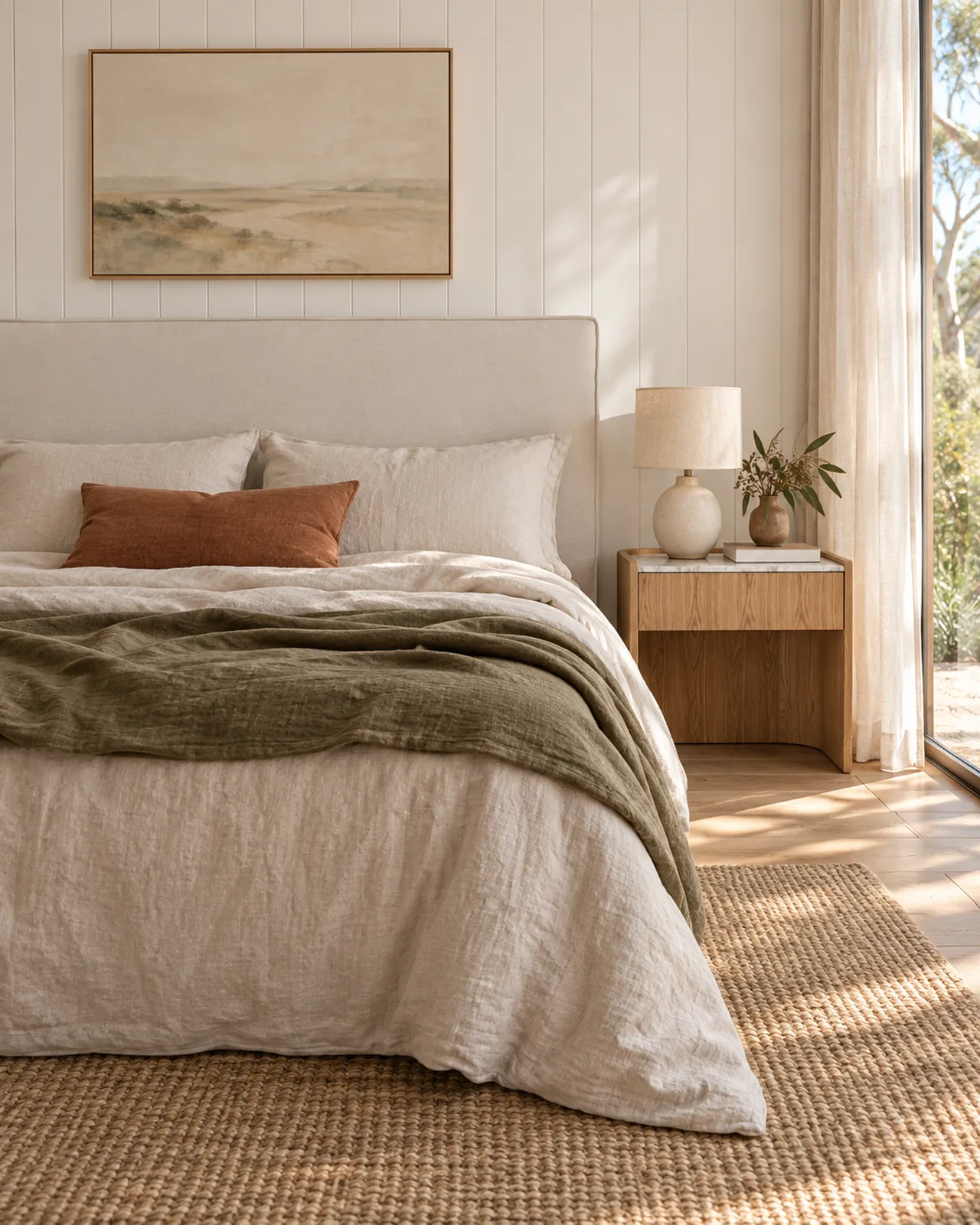
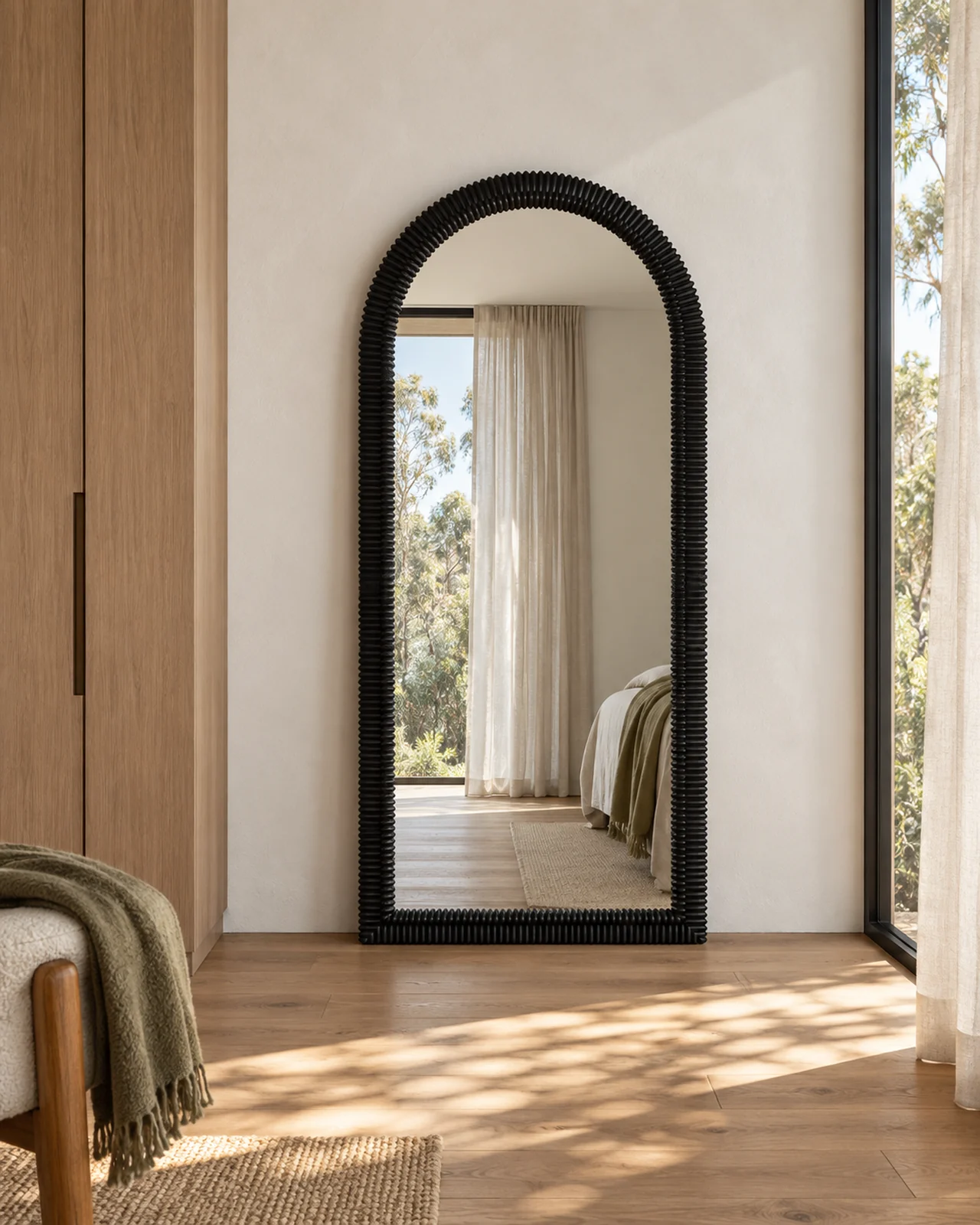
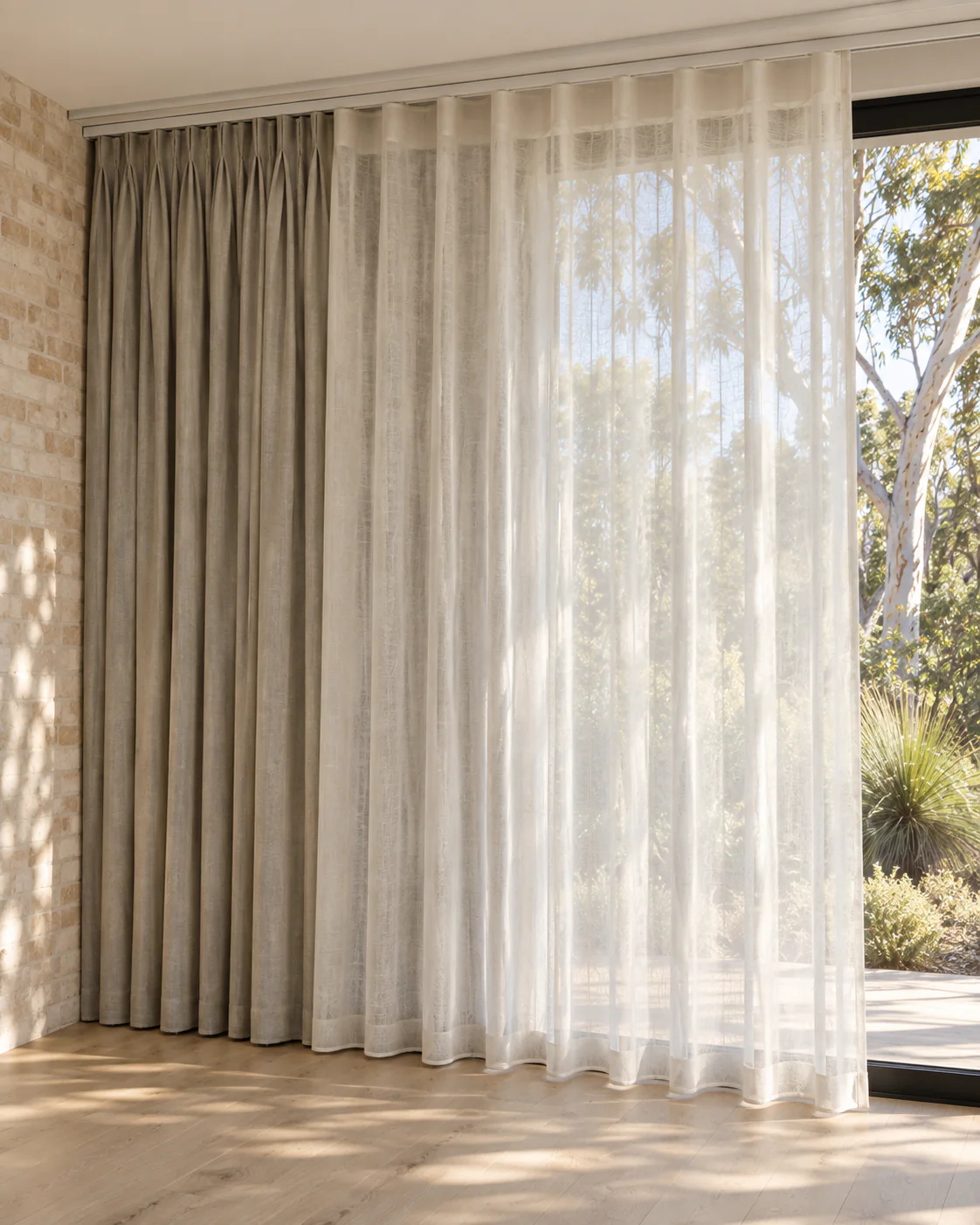
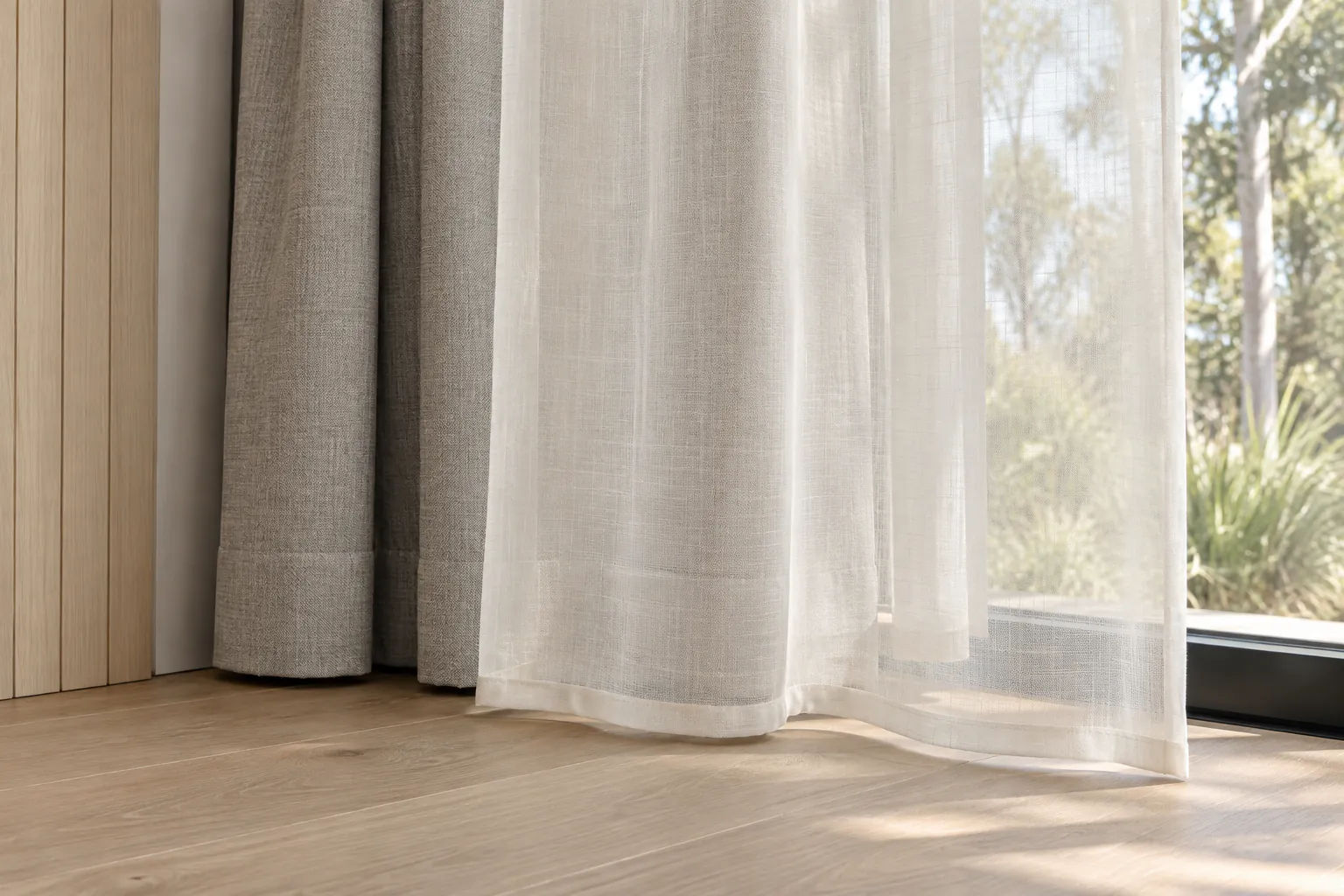
Layered sheer + blockout is a two-track system on a single window. A sheer runs on the room-side track for daytime; a blockout runs on the wall-side track for night. Both hang floor-to-ceiling. Each closes independently, so the room has three modes: sheer closed for softened daylight, both open for clear glass, both closed for dark.
It's the standard bedroom setup, and it works in living rooms with glare problems too. The two tracks can carry different headers on each curtain: often wave on the sheer for the drape, pinch or reverse pleat on the blockout for the seal.
The honest bit
Two tracks eat wall space you may not have
This is what people don't plan for. A twin-track system needs enough depth at the ceiling to carry two tracks side by side, and enough wall run either side of the window for two curtains to stack open without covering the glass. On a generous window with plenty of surrounding wall, that's fine. On a window that already sits close to a corner or another opening, the stack from the blockout alone will eat into the view, and the sheer stack sits behind it. Retrofitting a second track after plaster is doable but not clean: the fixings are visible, the track heights rarely line up, and the two headers read at different depths. The layered system is a lot easier to specify before the ceiling goes up than after, and the room-and-wall audit at the measure is the whole reason we ask about it.
Where it works best
Bedrooms, media rooms, street-facing living
This is our default in a bedroom and any room that has to serve two moods. The sheer runs during the day for soft filtered light and privacy from the street; the blockout closes at night for real darkness and quiet. Also the right call on a media room, a nursery, or a west-facing living room where the afternoon sun is a real problem. If it's a single-purpose window (a laundry, a kitchen, a hallway) the layered system is overkill; pick one layer and move on.
Where it belongs
Who it suits, and who it doesn't
Who it suits
- Bedrooms where sleep and softened daylight both matter
- Living rooms with strong afternoon glare and no roof eaves
- New builds and renovations that can plan the ceiling before plaster
- Windows with generous wall run either side for the twin stack
Who it doesn't
- Reveal-fit windows, where a second track can't sit alongside the first
- Windows close to corners or other openings without stack space
- Ceilings already recessed for a single track pocket
- Budgets sized for one curtain (two tracks means two curtains, not one and a half)
Questions Worth Asking
Frequently asked
Room-side sheer, or room-side blockout?
Sheer to the room every time. The sheer sits in daylight; the blockout does its work at night behind it. Reversing the order makes the sheer invisible during the day and the blockout gather awkwardly at the edges when open. The order is not a preference, it's the way the system works.
Can I add a second track to an existing single-track window?
Yes, but read the honest bit above. The retrofit works, but the second track fixings and the track heights are rarely as clean as a planned install. If a bedroom is being renovated for any other reason, plan the second track then and skip the retrofit.
Do the two curtains have to match?
No, and normally they don't. The sheer is chosen for how it filters light, the blockout is chosen for how it seals. Colour-family together, texture together, but the two fabrics are picked for different jobs. Matching them exactly is a common mistake that flattens both.
Does the blockout need to be wider than the sheer?
Usually a little, so the blockout can return past the sheer to the wall and seal the edges. Not by much, and it's more about track alignment than curtain width. The measure sets this precisely for each window.
Next Step
Book a free measure & consultation
A 15-minute phone call first. Then, if it's a fit, we come and measure your layered sheer + blockout and anything else you'd like specified at the same visit.
Book my free measure →