




Curtains & Blinds · Sheers
Sheer curtains
Daylight, softened.
What it is
Sheer curtains
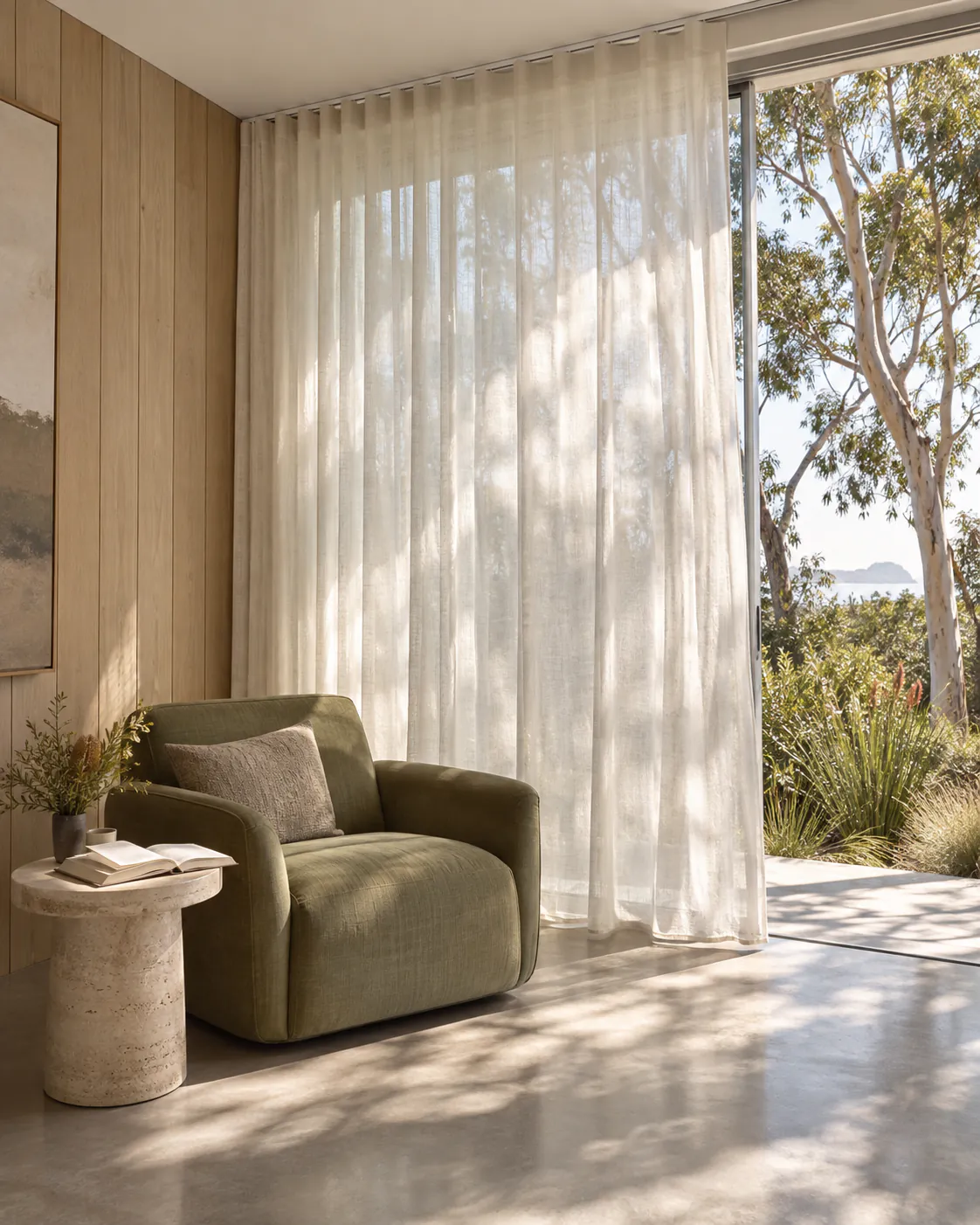
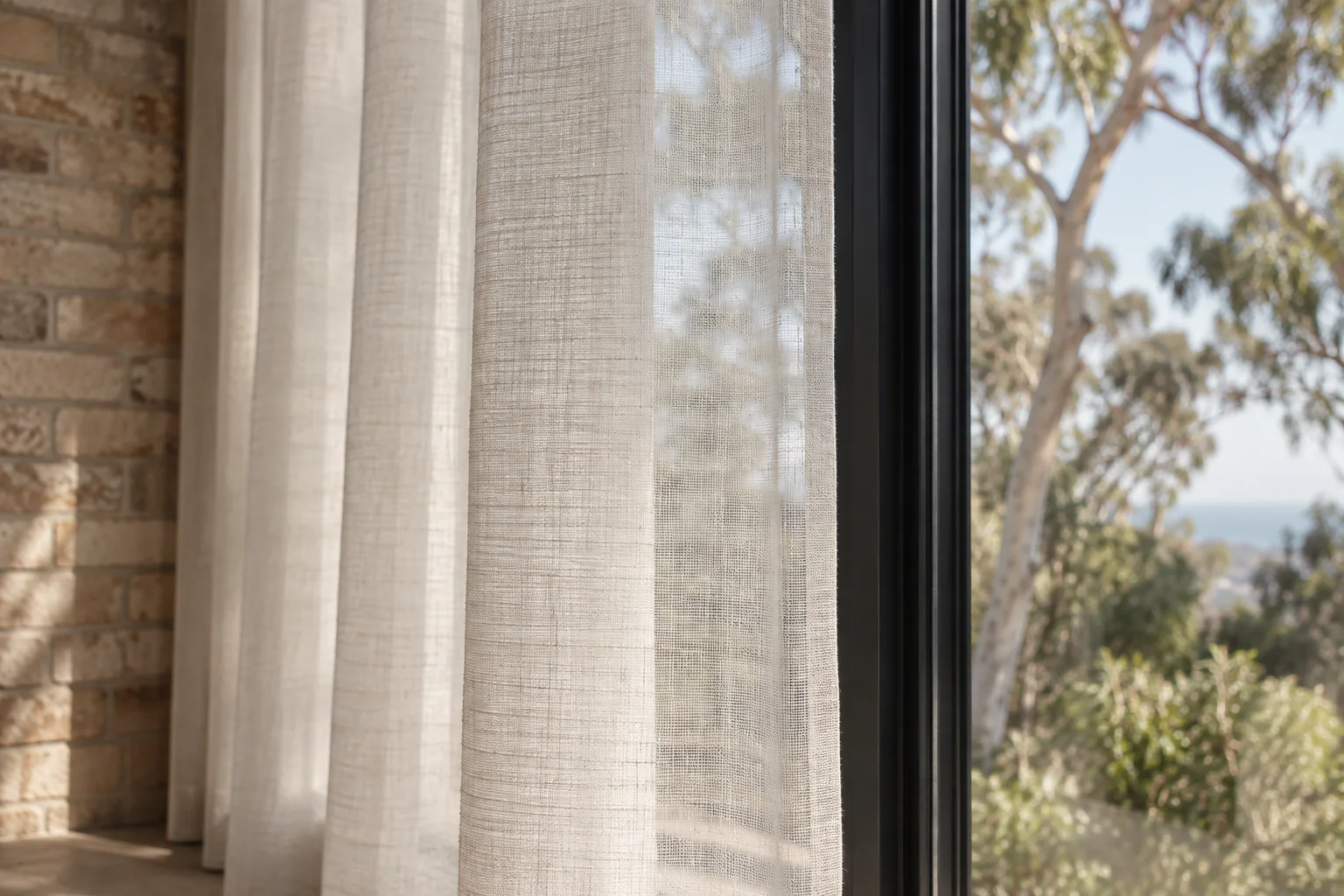
A sheer is a light-filtering curtain hung floor-to-ceiling on its own track, usually a wave / S-fold header, sometimes a pinch pleat header for a more tailored room. The fabric itself is loose-weave linen or a linen-look synthetic. The point isn't to block light; it's to soften it.
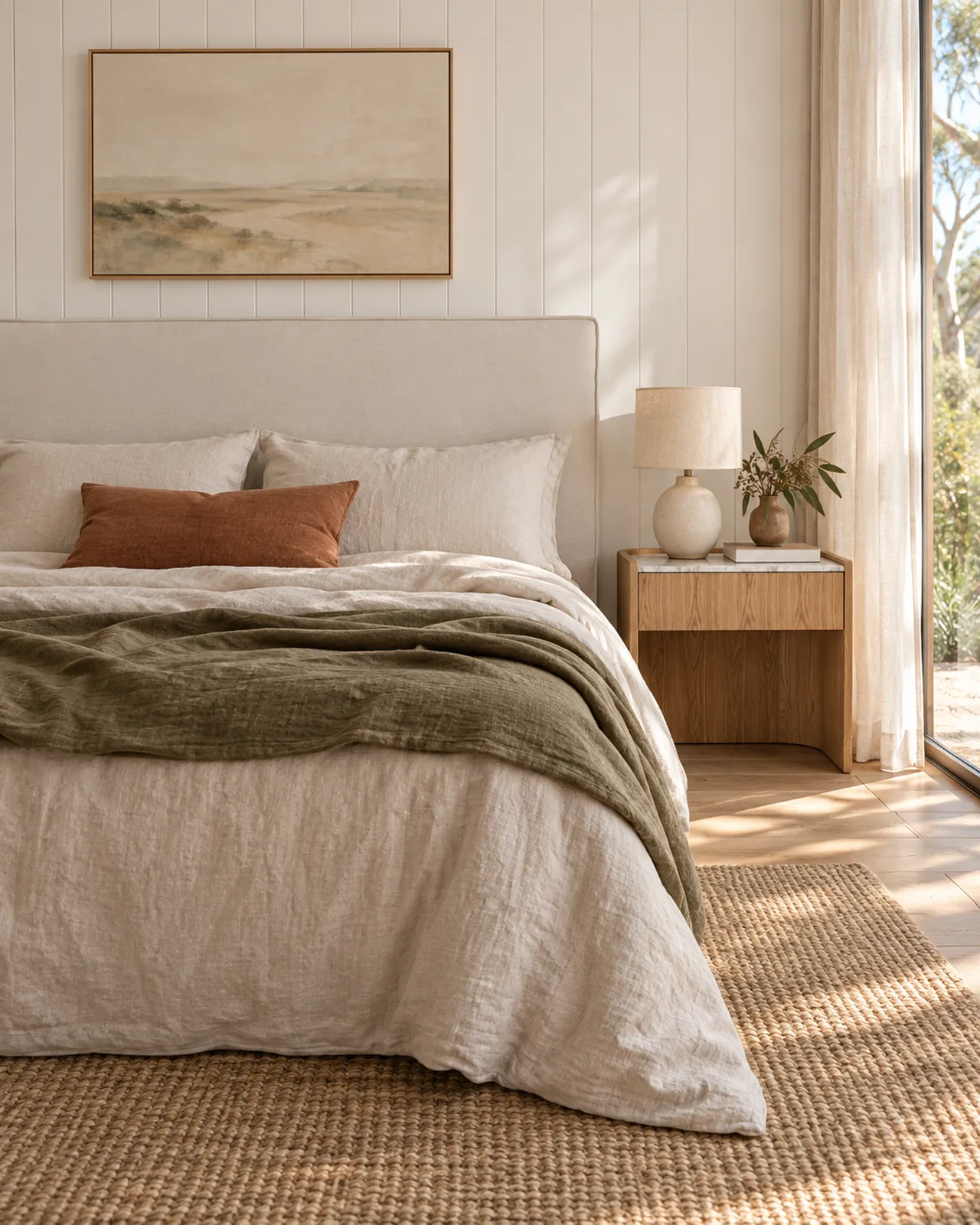
Sheers are often layered on a second track behind a blockout curtain. The sheer runs during the day, the blockout closes at night. On a bedroom window we specify the second track before plaster whenever the client can plan for it.
The honest bit
Fullness is what makes a sheer look like a sheer
A sheer shows its own weave. Because the fabric is transparent, under-fullness reads as a flat panel of gauze rather than a curtain. You can see the wall behind, and the folds fall out. Sheers need more fullness than a blockout to look like anything at all. That's the first thing that separates a good sheer from a cheap one. The fabric is inexpensive; the reason a well-made sheer costs what it does is the amount of it. (Separately, sheers reverse their privacy at night. A sheer that hides you in daylight shows you off after dark. We cover that in detail on the main Curtains & Blinds page.)
Where it works best
Living rooms, street-facing windows, layered bedrooms
Sheers do their best work where daytime softness matters: living rooms, dining rooms, studies and any street-facing window that wants privacy without giving up the light. On a bedroom we pair the sheer with a blockout behind, so the day layer stays airy and the night layer does the work. Whole-wall runs with a lot of glass are where a sheer earns its place; on a small isolated window it can feel underdone and a curtain-plus-liner or a Roman may sit better.
Where it belongs
Who it suits, and who it doesn't
Who it suits
- Living rooms and open-plan spaces facing north or east
- High-glare rooms where you want light but not heat glare
- Layered with a blockout in bedrooms and media rooms
- Rooms with high ceilings, where the vertical drop of a sheer is the effect
Who it doesn't
- Standalone in a bedroom (you need a blockout behind it; see layered sheer + blockout)
- West-facing glass without a blockout lining behind, where the fabric fades hard
- Rooms with no stack space, where a sheer bunched over glass looks worse than no curtain
- Reveal-fit tracks, where sheers need to hang past the frame to work
Questions Worth Asking
Frequently asked
How full should a sheer be?
Fuller than you think. The exact multiplier depends on the header and the fabric, but a sheer needs enough width to hold visible folds even when drawn. Otherwise the light passes straight through a flat panel. We'd rather over-specify fullness on a sheer than any other curtain.
Linen sheers or synthetic sheers: which is better?
Linen has the softer hand and the more natural fall, but it creases and it moves with humidity. Synthetic linen-look sheers hold their shape better and cost less, but they don't age the same way. In Queensland's light and humidity we specify both, depending on the room.
Will sheers fade in Queensland sun?
Yes. Australian light is harsh on unlined fabric, and sheers are unlined by definition. On any window that catches direct afternoon sun we recommend layering a blockout behind, both to protect the sheer and to keep the room usable. West-facing glass without a blockout will punish a sheer within a few years.
Can I layer sheers with blockouts on the same window?
Yes. This is the standard bedroom setup. Two tracks, sheer room-side and blockout wall-side, both floor-to-ceiling. It's easier to plan before plaster than to retrofit; the second track needs its own fixings.
Next Step
Book a free measure & consultation
A 15-minute phone call first. Then, if it's a fit, we come and measure your sheer curtains and anything else you'd like specified at the same visit.
Book my free measure →