

Curtains & Blinds · Roman Blinds
Roman blinds
A soft fabric blind that folds into horizontal pleats as it lifts.
What it is
Roman blinds
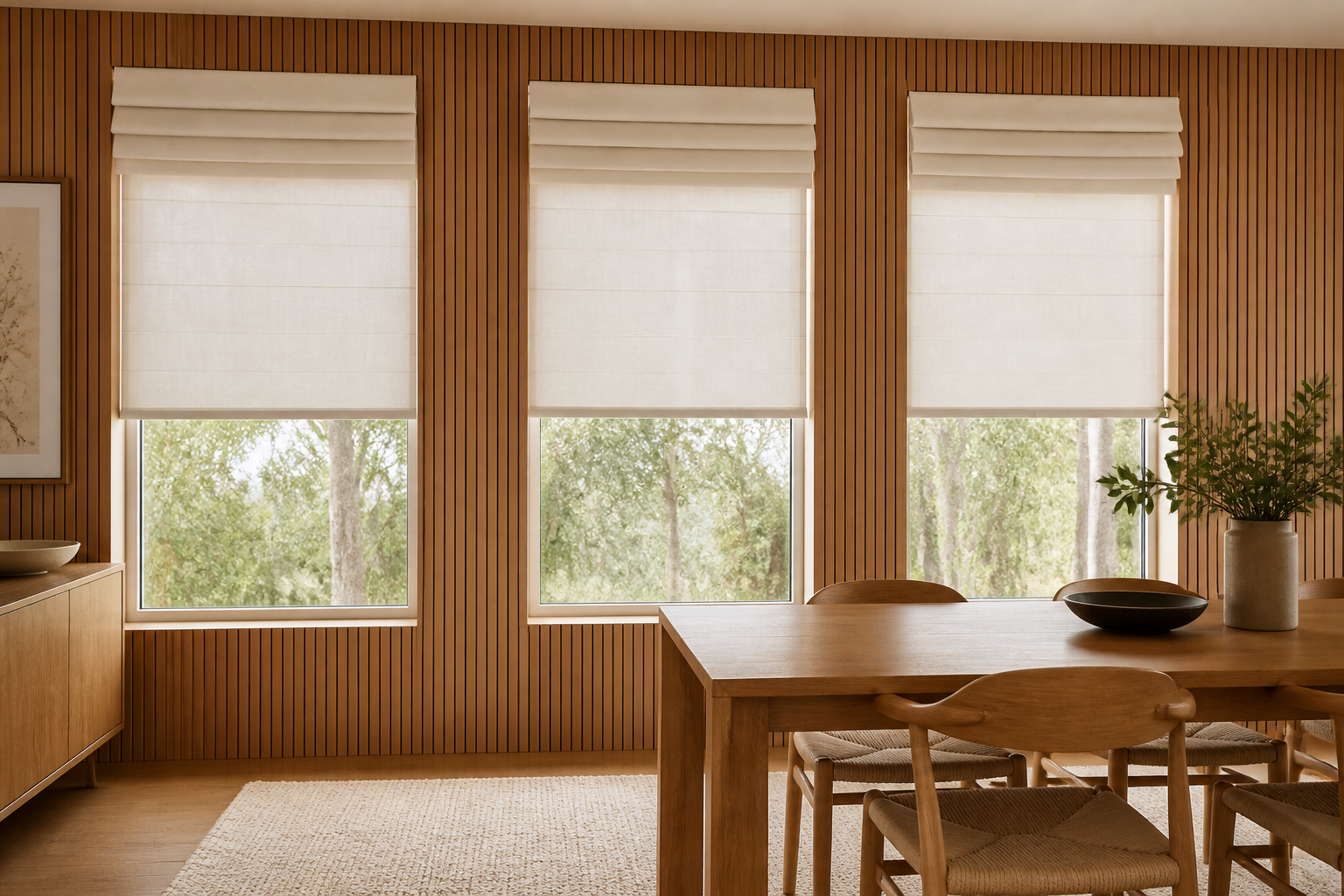
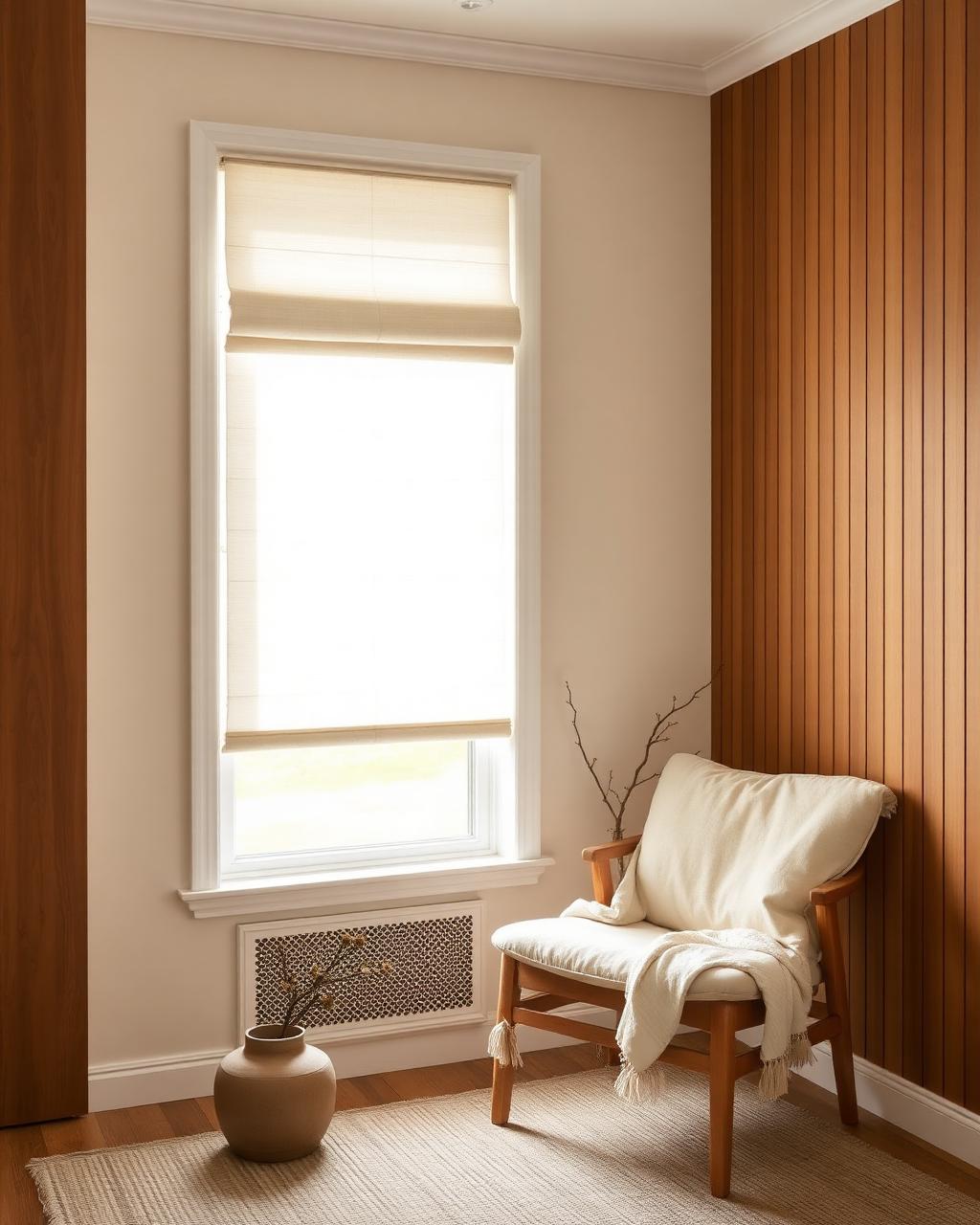
A Roman blind is a flat panel of fabric that gathers into horizontal pleats as it lifts. Classic style stacks into soft, unstructured folds; plantation style uses fixed battens through the back so the folds hold a straight, tailored line whether the blind is raised or lowered. Operation is a side chain, with a range of chain and batten colours so the hardware disappears against the fabric.
It's the softest of the blinds. From the room, a Roman reads more like a curtain than a hard-edged blind: fabric, texture, and a fold rather than slats or a tube.
The honest bit
The stack sits over the top of the glass
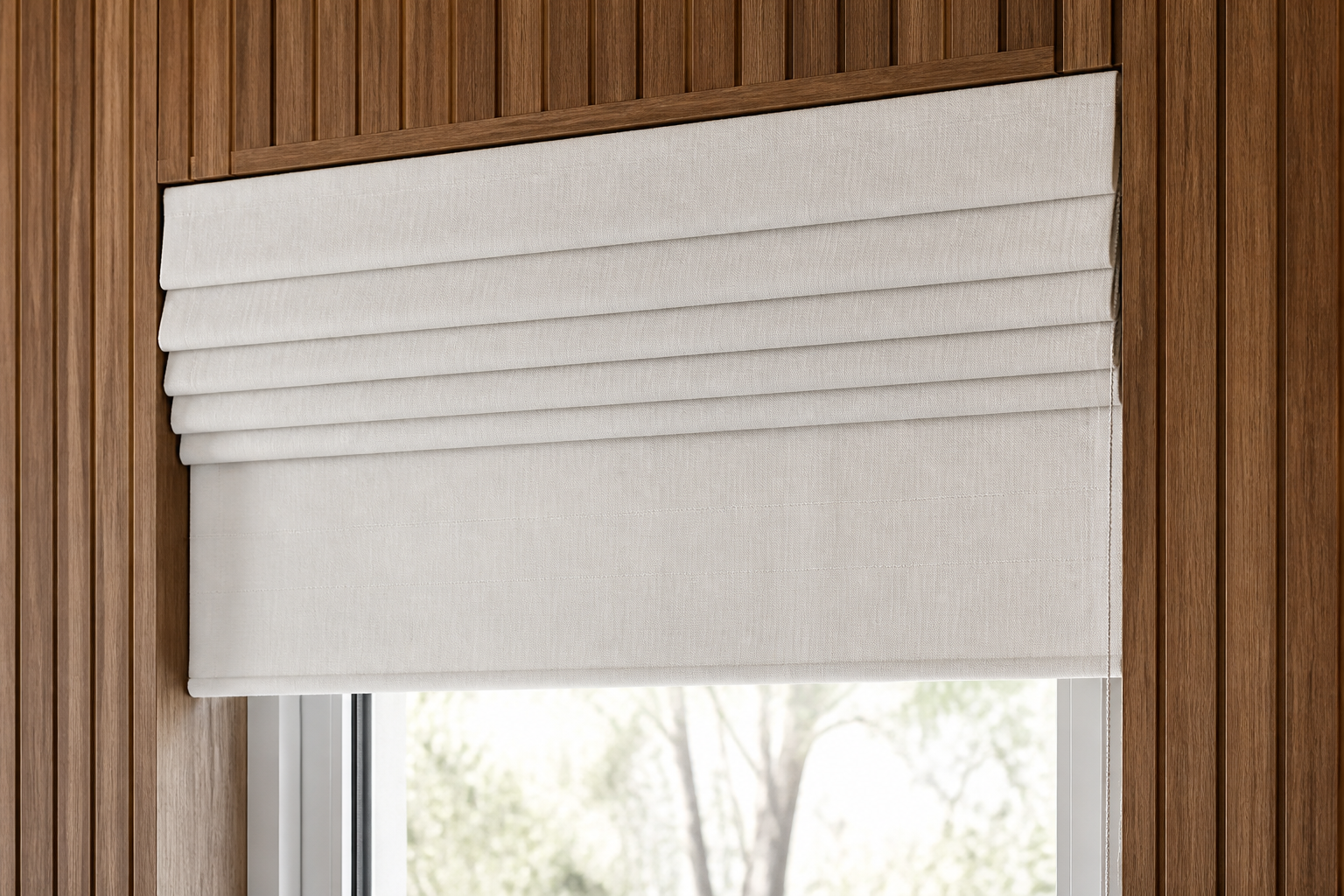
This is the part to plan for. Even fully raised, a Roman blind's folded stack sits over the top of the window, because that's where it lifts to. It never clears the glass completely the way a roller does. On a tall window that's fine, and the stack reads as a fabric pelmet. On a short window, or a window where the view above head height matters, the stack eats into the daylight. If clearing the whole opening matters, a roller or a curtain is the better answer; if the softness of fabric is the point, a Roman is exactly right.
Where it works best
Feature windows where fabric is the point
Roman blinds belong on a single feature window: a bay above a kitchen bench, a study, a spare bedroom, a dining alcove where a curtain would compete with joinery either side. The soft fabric read carries texture into a room at a scale a curtain would overwhelm. They also sit well in traditional and transitional interiors that want a warmer window without the wall run for a full drape. Skip them on wet rooms and on short windows where the raised stack eats the view.
Where it belongs
Who it suits, and who it doesn't
Who it suits
- Bedrooms and studies where a soft fabric read is wanted without a full curtain
- Kitchen and dining windows above bench height
- Rooms where a curtain would compete with joinery either side of the window
- Traditional and transitional interiors that want texture at the window
Who it doesn't
- Short windows where the raised stack covers too much glass
- Very wide windows past a single-panel span, where the fabric can sag
- Rooms that need a true dark seal (a blockout curtain fits the window better)
- Wet rooms and splash zones where the fabric will collect moisture
Questions Worth Asking
Frequently asked
Classic or plantation Roman: which one?
Classic gives soft, unstructured folds and is the more casual read. Plantation runs fixed battens through the back so the folds stay crisp and horizontal even when the blind is down. Plantation is tidier on a tailored room; classic is warmer on a relaxed one.
Can a Roman be made blockout?
Yes, with a blockout lining behind the face fabric. It stops light through the cloth. Around the sides and top there will still be some ambient light because the blind sits inside the reveal or just outside it, not floor-to-ceiling wall-to-wall the way a blockout curtain can. For a genuinely dark bedroom, a blockout curtain is the stronger answer.
How is a Roman different from a roller?
A roller is a single flat sheet wound onto a tube; a Roman is a soft panel that folds. Rollers clear the whole window when raised; Romans stack a fabric pelmet at the top. Rollers read as hardware; Romans read as fabric. Different products for different rooms.
Are Roman blinds child safe?
Standard side chains are fitted with a child-safety cleat as a matter of course. Motorised operation removes the chain entirely and is worth considering in bedrooms and playrooms.
Next Step
Book a free measure & consultation
A 15-minute phone call first. Then, if it's a fit, we come and measure your roman blinds and anything else you'd like specified at the same visit.
Book my free measure →