


Curtains & Blinds · S-fold / Wave
S-fold / wave curtains
Soft, continuous vertical waves. The contemporary drape.
What it is
S-fold / wave curtains
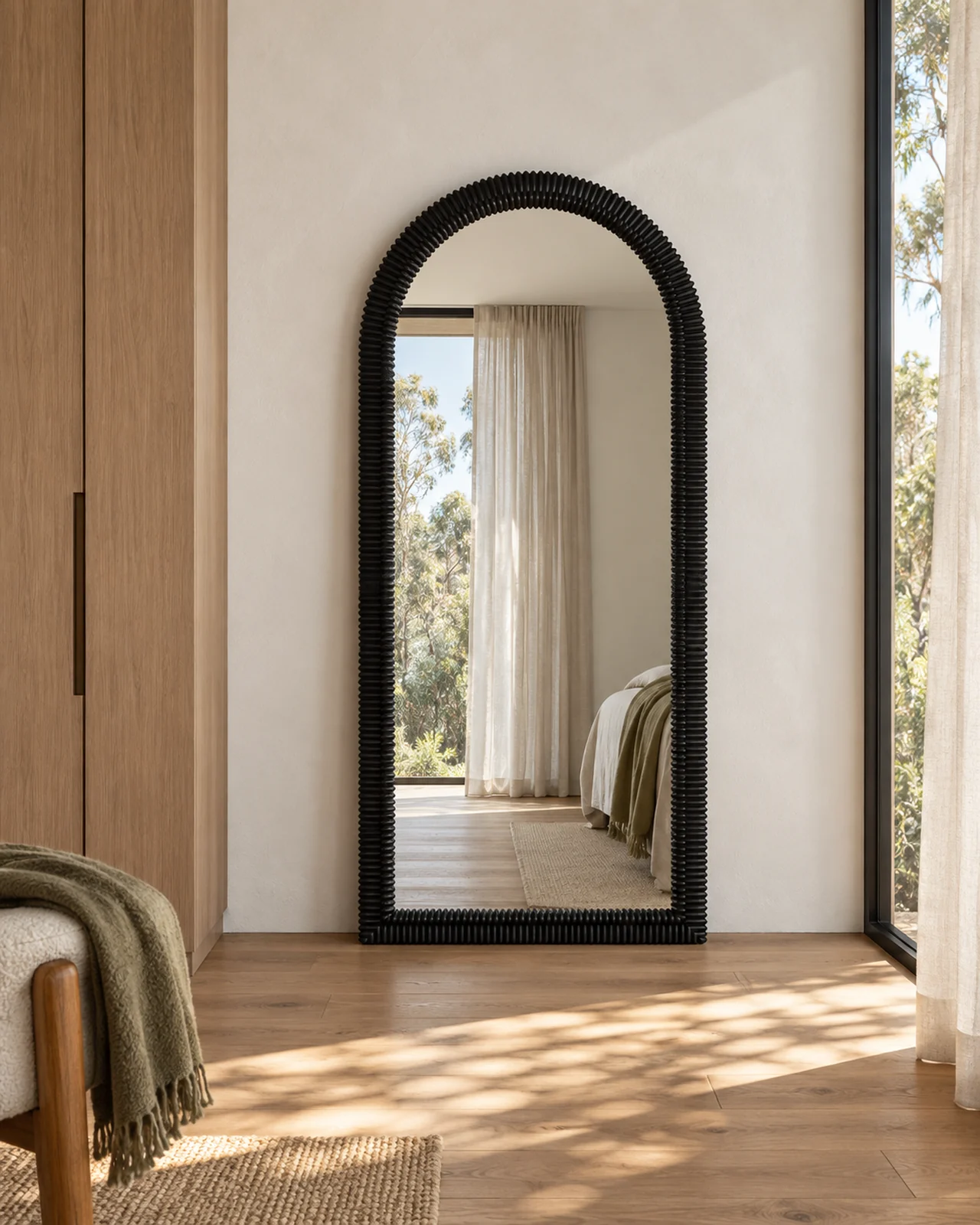
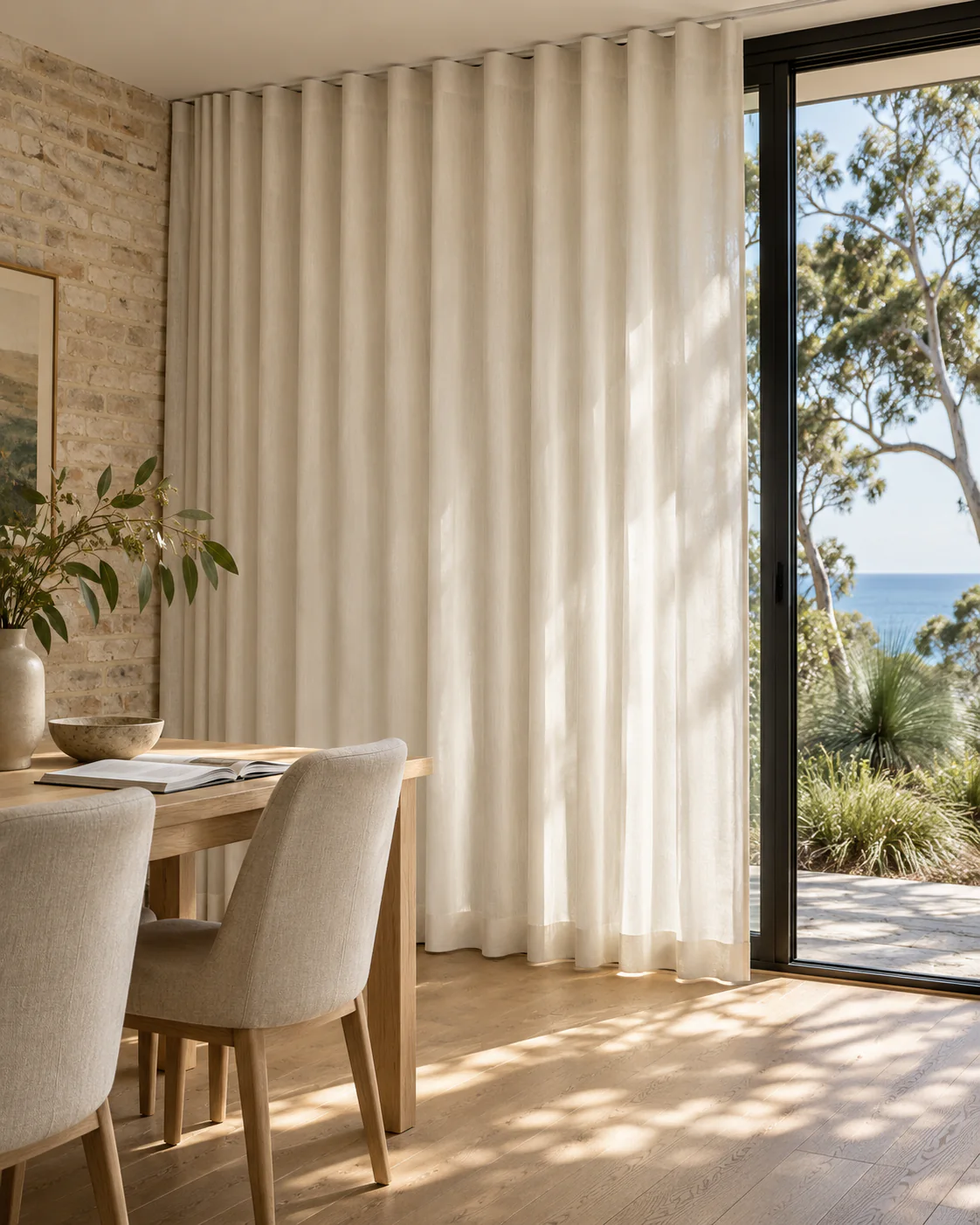
S-fold, also called wave, is a curtain header that hangs in soft, continuous vertical waves rather than fixed pleats. It needs a proprietary track: cord carriers spaced at fixed intervals along the track hold the top of the fabric in a repeating S. Without that track, you don't get wave.
Wave uses more fabric than most other headers. It runs around 2.5–3.0× the width of the window. The trade quotes we hold express the same thing as wave fold fullness of 120%. Either way, it's a fabric-heavy header, and the fabric quantity is why a wave curtain looks the way it does. Cheap it and the wave collapses into a flat panel.
The honest bit
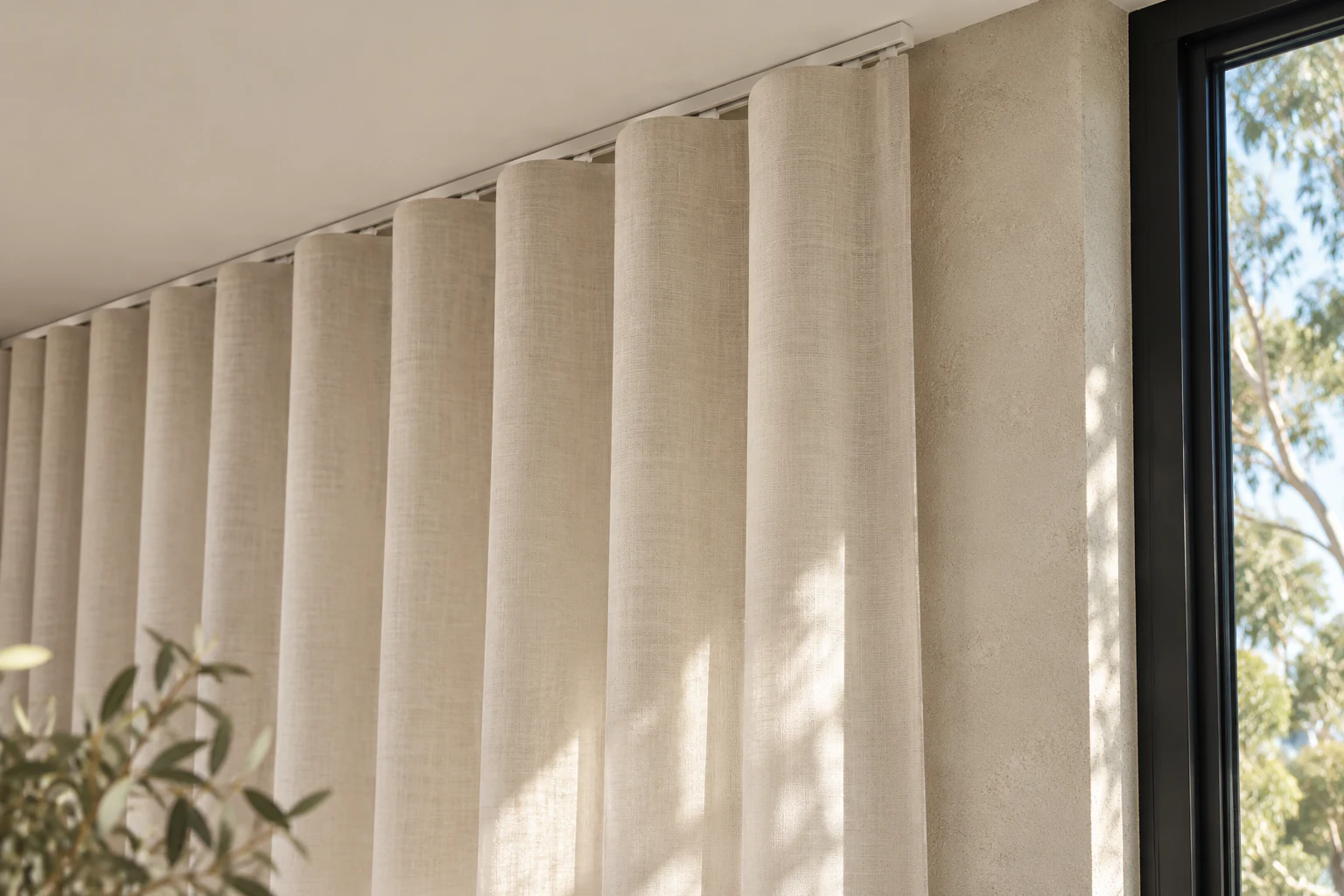
The track stays visible below the ceiling
This is the trade-off nobody mentions until installation day. The wave header sits at the top of the fabric, and the specialised track sits above the header, which means the track itself is exposed just below the ceiling line unless you've recessed it into the plaster or hidden it behind a pelmet. The sculptural look has a hardware tax: either accept a visible track, or plan the recess before the ceiling goes up.
Where it works best
Modern openings with height and ceiling depth
S-fold is the right pick for contemporary and coastal-contemporary interiors: square-set ceilings, wide living-room openings, stacker doors and any window where you want the wave to run continuously without a decorative head interrupting it. It gives its best on runs with a bit of height to show the vertical, and looks strongest on tracks recessed into a bulkhead. On period homes with pelmets and decorative rods, pinch pleat sits more comfortably; on a small isolated window, a Roman may read better than a short curtain.
Where it belongs
Who it suits, and who it doesn't
Who it suits
- High ceilings and generous stack space either side of the window
- Minimalist and contemporary interiors where the curtain is meant to read as sculpture
- Rooms where the wall around the window can absorb the wider stack
- New-build and renovation projects that can plan a recessed track
Who it doesn't
- Rooms where the track has to disappear (choose reverse pleat instead)
- Wall-to-wall openings with no stack space
- Low ceilings where the visible track eats into the drop
- Retrofits onto existing standard curtain tracks, where the hardware doesn't swap
Questions Worth Asking
Frequently asked
Why does wave need a special track?
The wave shape isn't held by the header. It's held by carriers on the track, at fixed spacings. Take the track away and the fabric hangs flat. You can't retrofit wave onto a standard curtain track, and swapping to wave later means new hardware, not just new curtains.
Can I retrofit wave into an existing home?
Yes, but plan for the visible track. Recessing the track into plaster after the ceiling is finished is expensive, so most retrofits accept a surface-mounted track and let it read as a fine line below the ceiling. It reads well in a contemporary room; less so in a traditional one.
Can wave be motorised?
Yes, with a compatible motorised wave track. It costs more than motorising a standard pleat, and it needs mains power at the track. If there's any chance of motorisation, we plan the wiring before the walls are plastered. Retrofitting the cable is what makes it expensive.
How much fabric does a wave curtain actually use?
For a two-metre window, a wave curtain typically needs six to seven metres of face fabric plus the same again in lining. The fullness is the point of the header. Cutting it back to save cost gives you a curtain that hangs like a flat sheet.
What's the difference between S-fold and reverse pleat?
S-fold (also called wave) gives soft, continuous vertical waves and needs its own specialised track, and that track stays visible below the ceiling. Reverse pleat sits forward of a standard track so the track is hidden. S-fold looks contemporary and sculptural; reverse pleat looks tailored and architectural. Both are correct; they belong in different rooms.
Can you do one continuous curtain across a very wide opening?
Sometimes. One-piece wave tracks look cleaner but need lift access to get on site. Apartments and older buildings often can't take them, and we specify a joined track instead. Something we work out at the measure.
Next Step
Book a free measure & consultation
A 15-minute phone call first. Then, if it's a fit, we come and measure your s-fold / wave curtains and anything else you'd like specified at the same visit.
Book my free measure →