

Curtains & Blinds · Reverse Pleat
Reverse pleat curtains
The header hides the track. A clean line straight to the ceiling.
What it is
Reverse pleat curtains
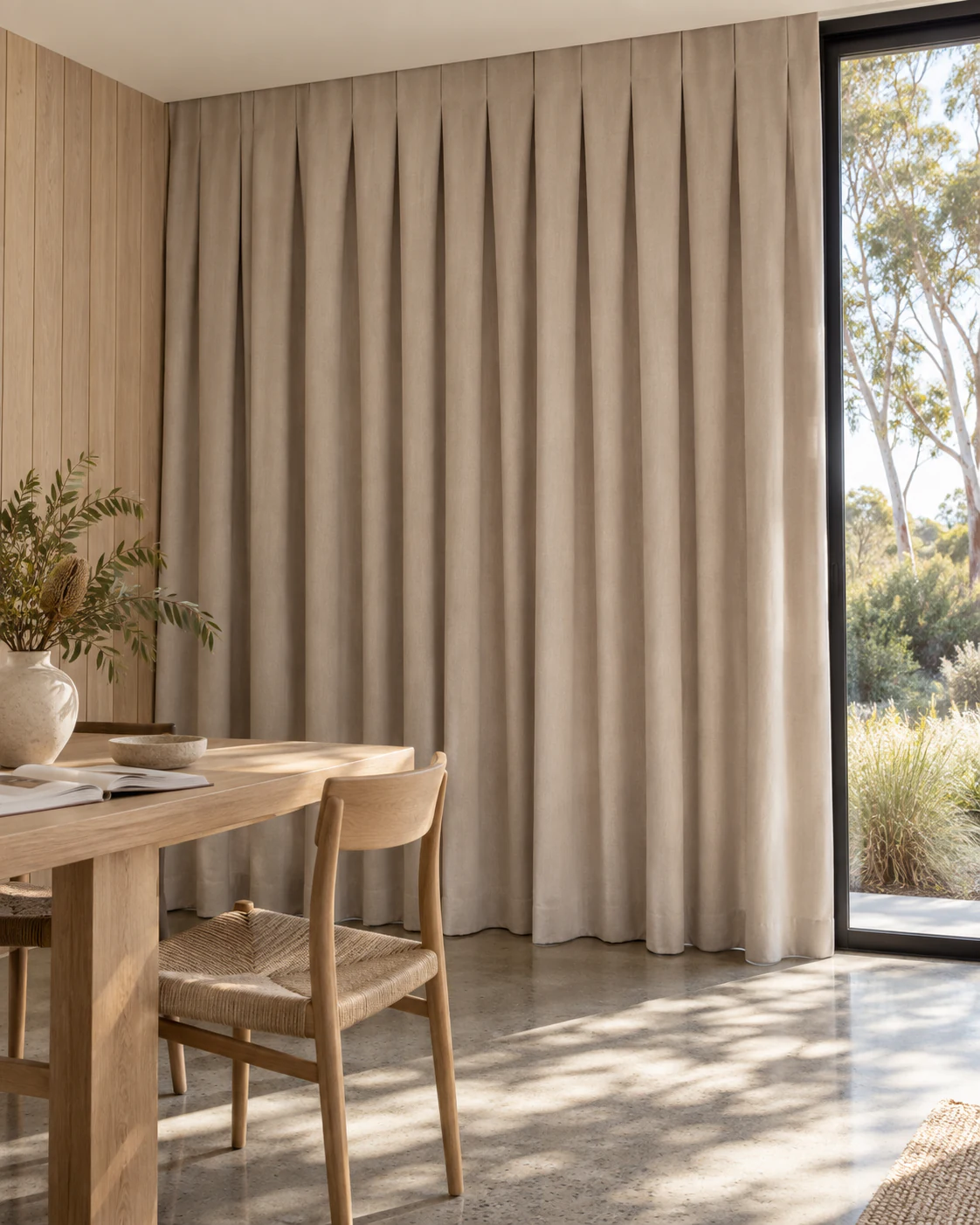
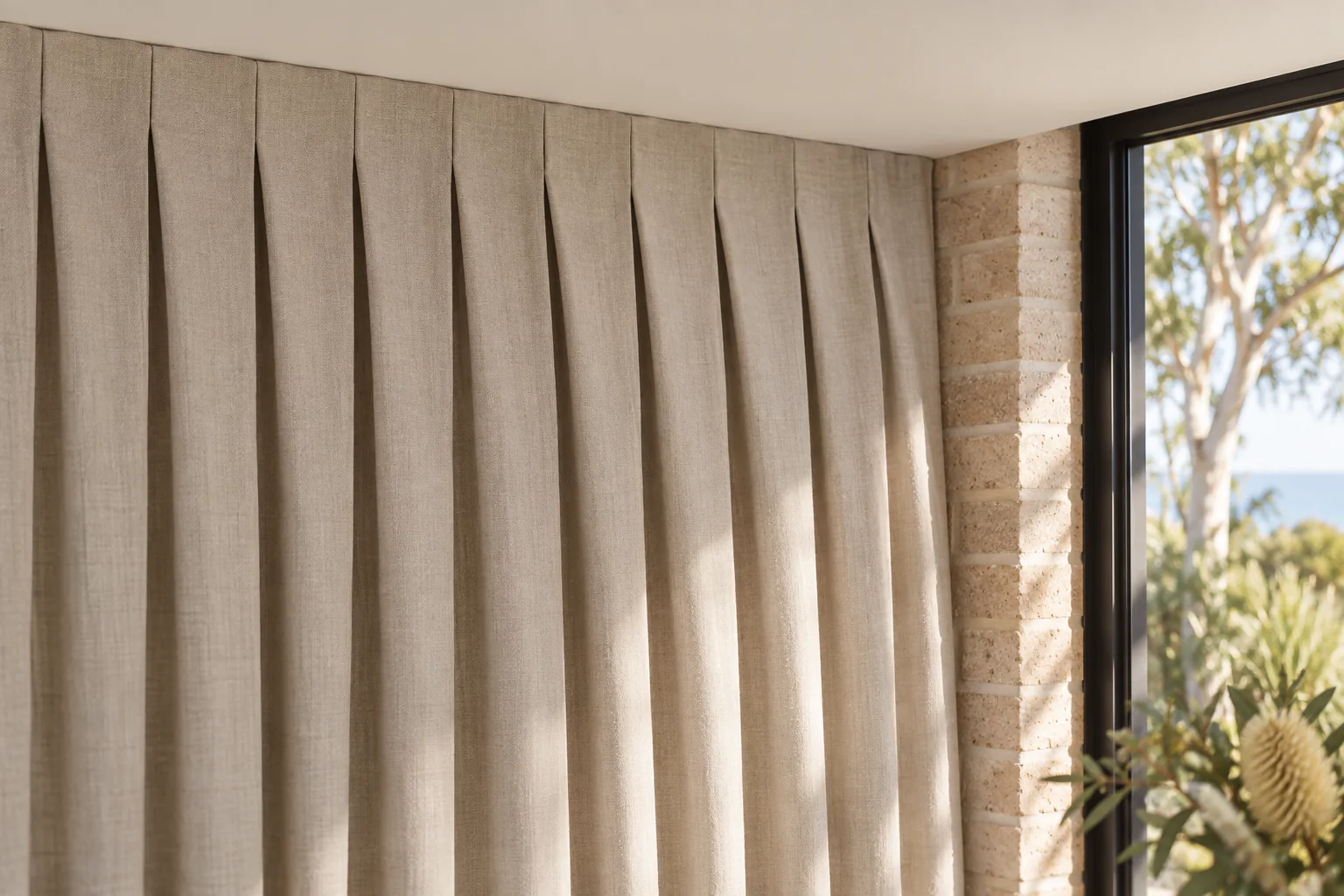
Reverse pleat is a curtain header where the pleat sits on the room-facing side of the curtain and rises above the top of the fabric, high enough to cover the track behind it. From the room, you see fabric and pleat straight up to the ceiling. The track disappears.
It uses roughly 2.0–2.2× the width of the window in fabric, which is less than pinch pleat and less again than wave. The economy sits in the fullness. The point is the line, not the volume.
The honest bit
Reverse pleat is a track solution, not a drape statement
This is the trade-off. Reverse pleat exists to hide a standard track when the ceiling can't be recessed and a pelmet isn't wanted. It does that job well. What it does not do is give you the sculptural continuous wave of an S-fold, or the tailored formality of a pinch pleat. The header is honest about that: modest fullness, a quiet body, and a clean top line. If someone has sold you reverse pleat as the best of both worlds, they've oversold it. The right question is whether hiding the track matters more to you than the drape itself. On the ceilings where it matters, the answer is usually yes.
Where it works best
Traditional and transitional rooms with wall depth
Reverse pleat suits transitional and classic interiors where a curtain should read as a curtain, not as a piece of hardware. Formal living rooms, master bedrooms and dining rooms with a bit of ceiling height carry it best. Because the pleat holds a defined, structured face, it also handles heavier fabrics well, so it's a strong pick when the fabric is doing most of the storytelling. Skip it on tight modern joinery where an S-fold reads cleaner and on windows where you don't want the fabric held forward.
Where it belongs
Who it suits, and who it doesn't
Who it suits
- Retrofits where recessing the track into the ceiling isn't possible
- Rooms where the client wants curtain reading straight to the ceiling, without a pelmet
- Standard curtain tracks on square-set plaster ceilings
- Budget-sensitive projects where wave fullness isn't justified
Who it doesn't
- Rooms where the drape itself is the feature (choose wave / S-fold)
- Formal rooms wanting a tailored header (choose pinch pleat)
- Ceilings that already carry a recessed track pocket (wave will read better)
- Very short drops where the pleat height eats into the visible fabric
Questions Worth Asking
Frequently asked
How is reverse pleat different from a pelmet?
Both hide the track. A pelmet is a separate horizontal box built into the wall or ceiling above the window; reverse pleat achieves the same thing with fabric alone by carrying the pleat above the track. Pelmets add a building step and read heavier in the room. Reverse pleat is the softer answer where you don't want the extra chrome.
Does reverse pleat need a special track?
No. It sits on a standard curtain track. That's the point of choosing it: you keep standard hardware and still get a clean read to the ceiling. If the track is being recessed into the plaster anyway, wave or pinch on a recessed track will look better.
How much fabric does reverse pleat use compared to wave?
Meaningfully less. Reverse pleat runs around 2.0–2.2× the window width, wave runs closer to 2.5–3.0×. On a two-metre window that's around a metre and a half of face fabric saved, plus lining. The saving is real; so is the difference in how the curtain reads.
Can reverse pleat be motorised?
Yes, on a compatible motorised curtain track. Because reverse pleat uses standard hardware, motorising is more straightforward than for wave. It still needs mains power at the track, and it's easier to plan the cable before plaster than to chase it in afterwards.
What's the difference between S-fold and reverse pleat?
S-fold (also called wave) gives soft, continuous vertical waves and needs its own specialised track, and that track stays visible below the ceiling. Reverse pleat sits forward of a standard track so the track is hidden. S-fold looks contemporary and sculptural; reverse pleat looks tailored and architectural. Both are correct; they belong in different rooms.
Next Step
Book a free measure & consultation
A 15-minute phone call first. Then, if it's a fit, we come and measure your reverse pleat curtains and anything else you'd like specified at the same visit.
Book my free measure →