



Curtains & Blinds · Vertical Blinds
Vertical blinds
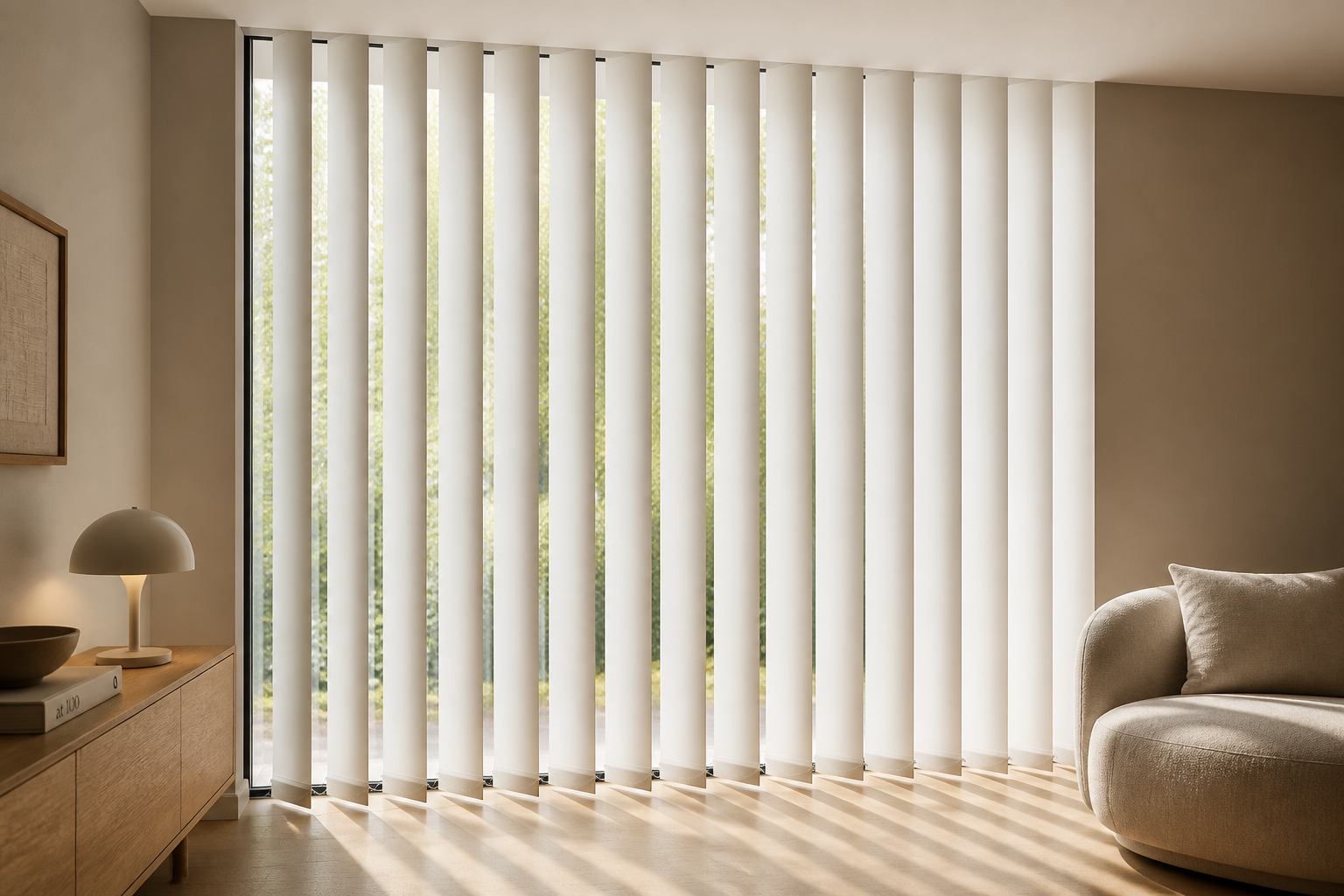
Vertical vanes on a top track. Practical, tilt to control, draw back to clear.
What it is
Vertical blinds
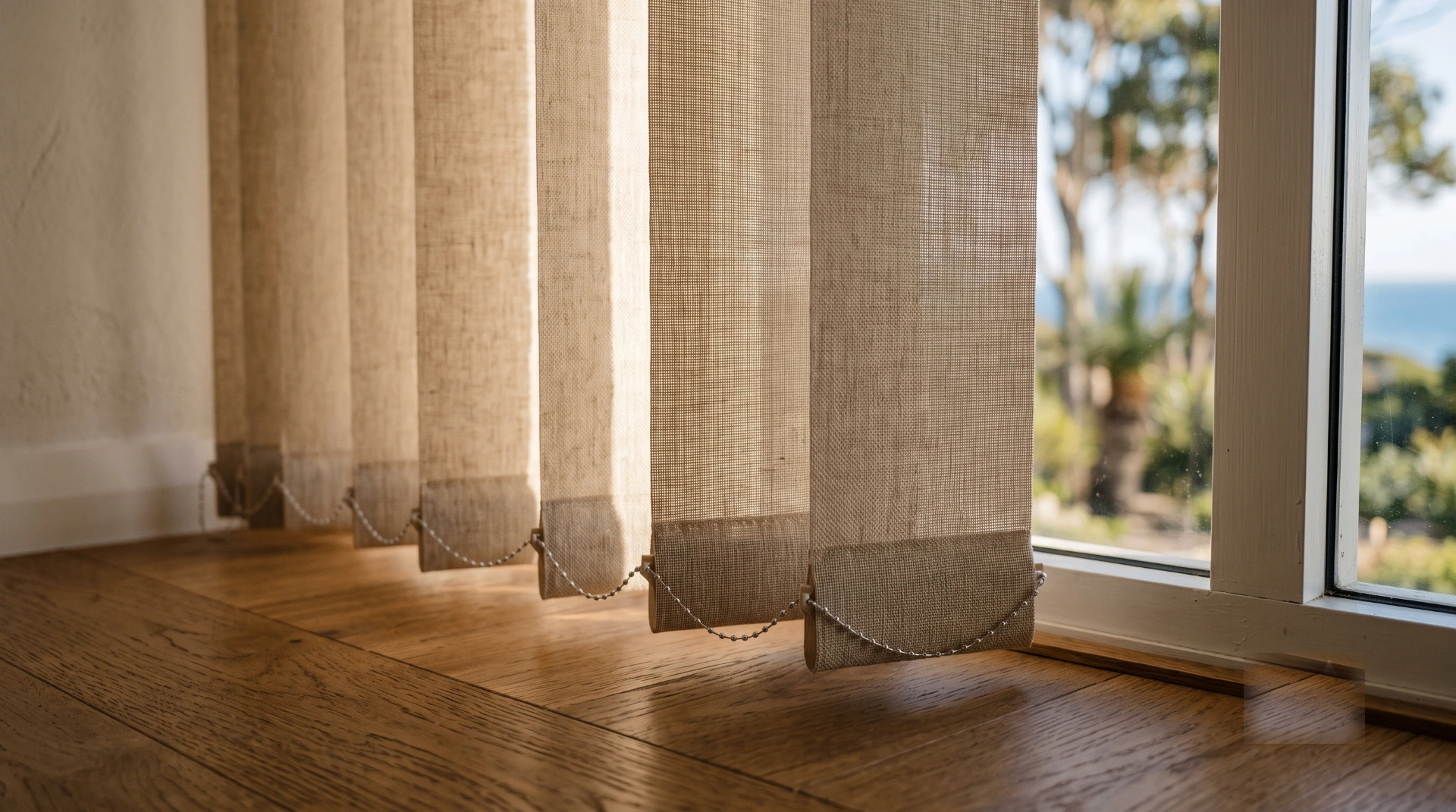
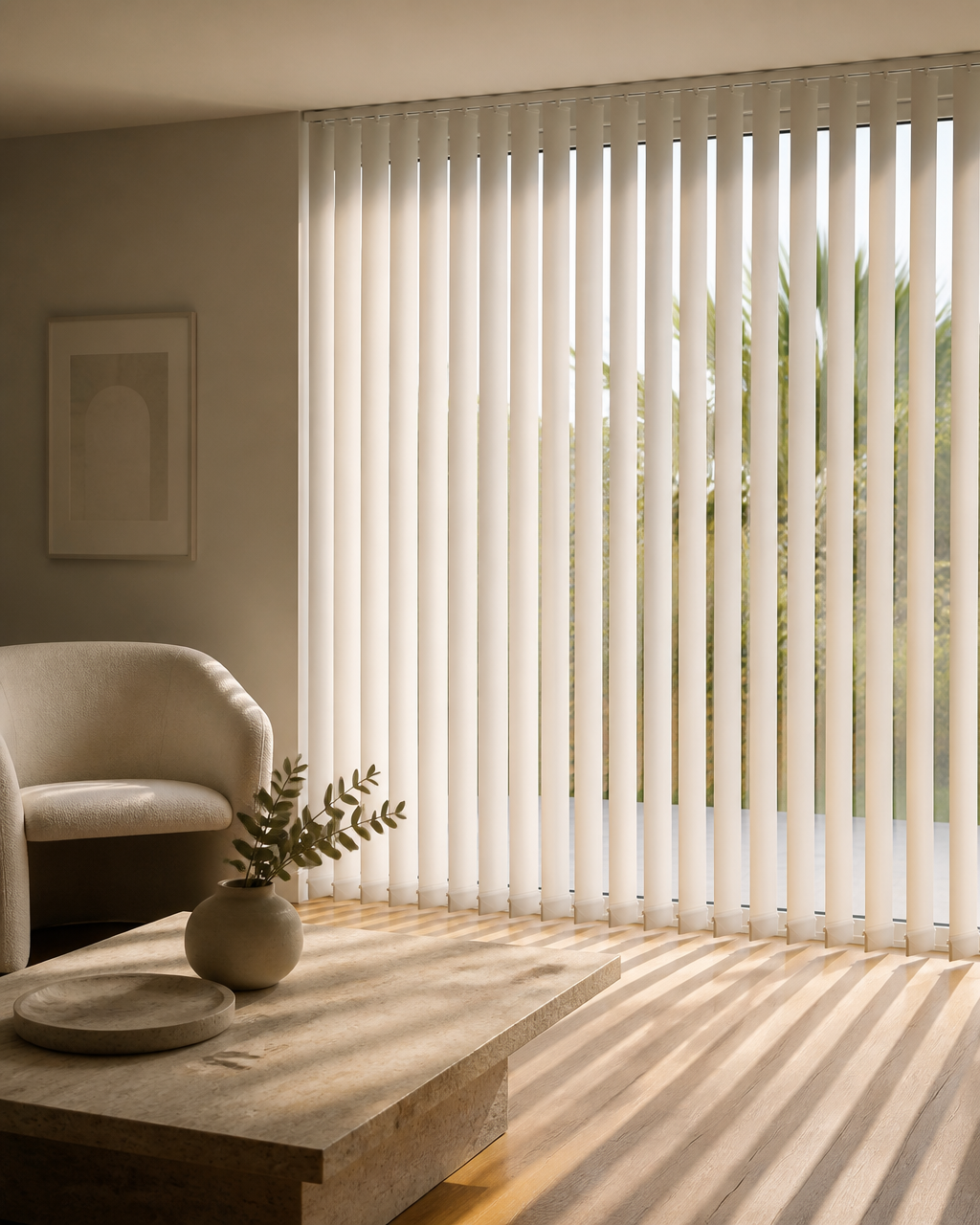
Vertical blinds hang as a series of vertical vanes from a top track, joined at the bottom by a light chain. A wand or chain tilts every vane at once to control light and privacy, and pulls the whole run open when you want the window clear. Vanes are usually PVC or a fabric-look composite. The system is at its best on tall windows and wide sliding doors, because the geometry works with the height rather than against it.
Vertical blinds are the value option for big glass. They cost less than a panel glide or Veri Shades, tilt more precisely than either, and stack tighter when fully drawn.
The honest bit
Free-hanging vanes can sway in a draught
Here's the trade-off. Vertical blinds are held at the top only; the bottom chain keeps the vanes in line but doesn't lock them still. In a draughty room, or near an open door, the vanes swing a little and knock together. It's why the product reads as more utilitarian than the fabric alternatives. If the movement and the sound would bother you, a panel glide or Veri Shades will feel stiller and more modern at the same big opening, at a higher cost.
Where it works best
Big glass, practical rooms, budget-first briefs
Vertical blinds earn their keep on tall windows and wide sliding doors where a curtain or panel glide isn't in the budget, and in offices, rentals and utility spaces where practicality matters more than softness. The tilt gives you real control across a wide opening, and the stack draws back tight when you want the glass clear. Keep them out of formal living rooms and bedrooms where softness or a genuine dark room is the point.
Where it belongs
Who it suits, and who it doesn't
Who it suits
- Tall windows where a horizontal blind would need too many slats
- Wide sliding doors where a curtain isn't wanted
- Rentals and offices where practicality and cost matter most
- Rooms where precise tilt control across a wide opening is the whole job
Who it doesn't
- Bedrooms wanting a true dark room (choose a blockout curtain)
- Formal living rooms where the read is meant to be soft and fabric-first
- Homes with young children where a cord-free system is safer (choose Veri Shades)
- Rooms that want the stillness of a Roman or panel glide
Questions Worth Asking
Frequently asked
Vertical blinds or Veri Shades?
Same idea, different fabric and feel. Vertical blinds use rigid vanes joined by a bottom chain and read as utilitarian; Veri Shades are soft free-hanging vanes on a sheer backing and read as a curtain. Verticals cost less and control light more precisely. Veri Shades cost more and sit better in a residential living room.
Vertical blinds or a panel glide?
A panel glide uses wide fabric panels and a wand; verticals use narrower rigid vanes and a chain. Panel glides read cleaner and more modern; verticals are more affordable and tilt more finely. On a straight sliding door in a considered interior, we lean panel glide; where budget or precise tilt matters more, we lean vertical.
Are vertical blinds child safe?
Standard chain operation is fitted with a child-safety cleat. Wand operation removes the chain entirely and is a safer specification in family rooms. Neither is as cord-free as Veri Shades.
Can vertical vanes be replaced individually?
Yes. Because each vane hangs off its own carrier on the top track, a damaged vane can usually be pulled and replaced without redoing the whole blind, provided the fabric is still available.
Next Step
Book a free measure & consultation
A 15-minute phone call first. Then, if it's a fit, we come and measure your vertical blinds and anything else you'd like specified at the same visit.
Book my free measure →