

Curtains & Blinds · Roller Blinds
Roller blinds
The quiet workhorse. Also called Holland blinds.
What it is
Roller blinds
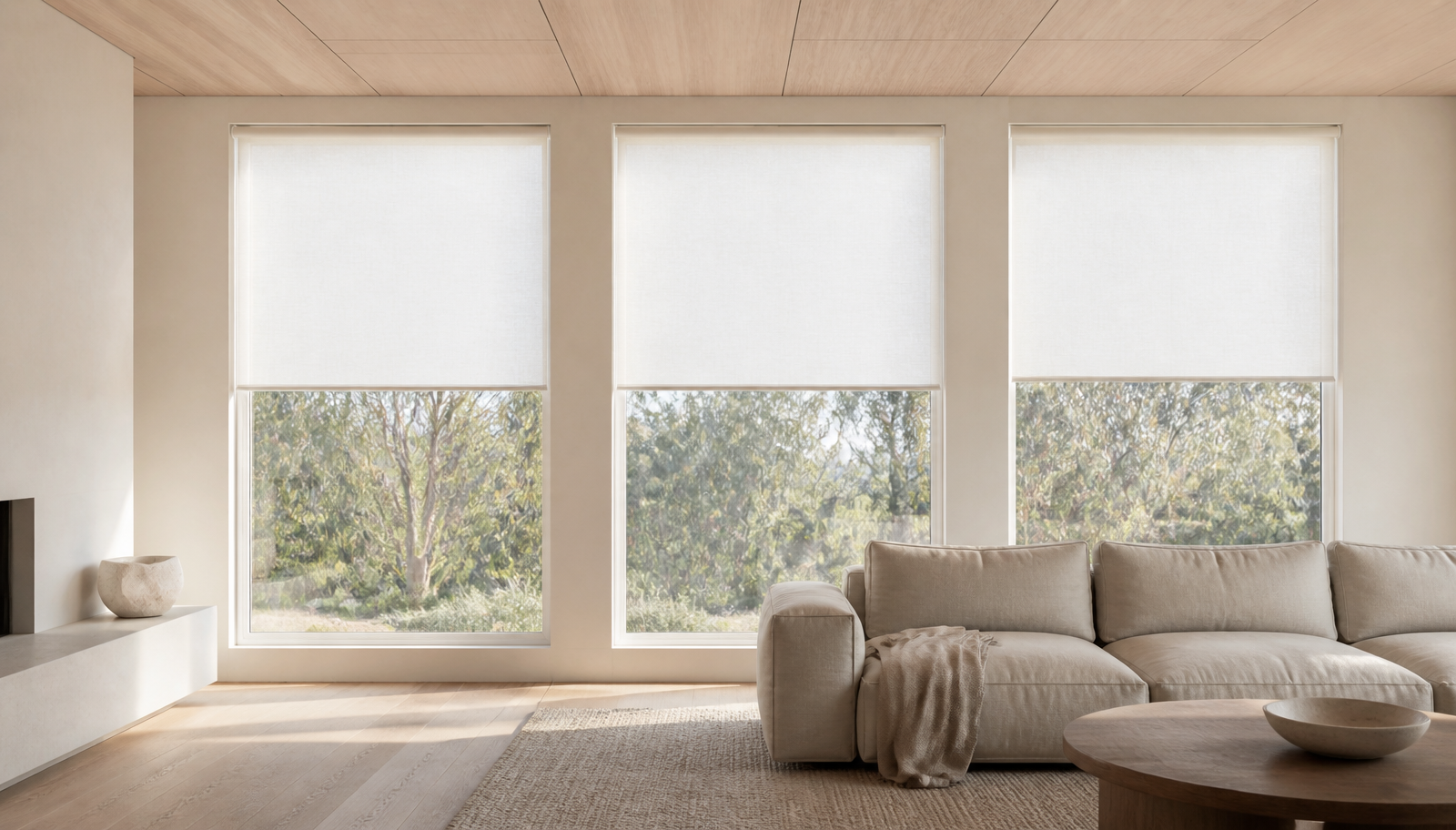
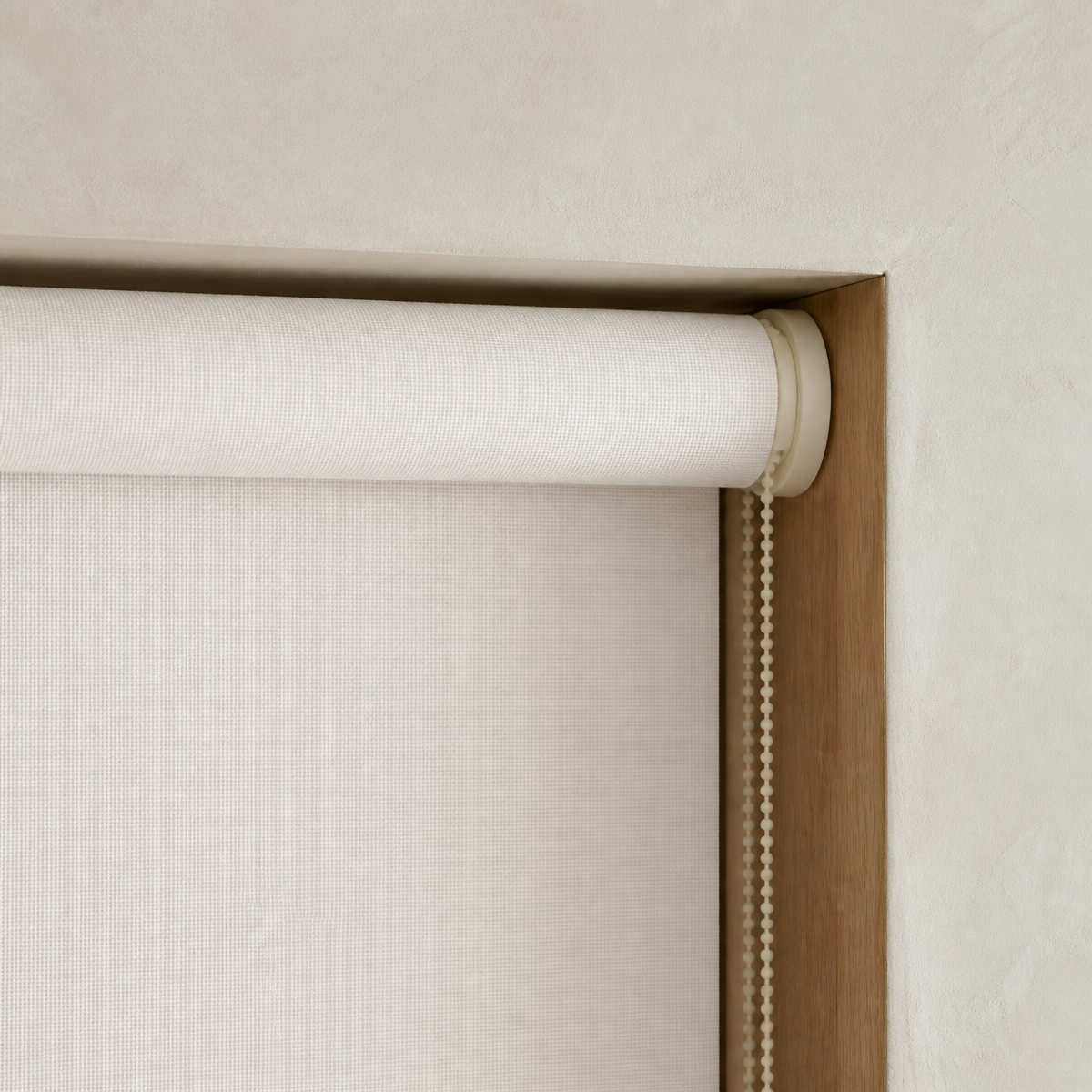
A roller blind is a single sheet of fabric wound onto a tube at the top of the window. Ours run on the Rollease Acmeda system, which is the standard hardware most Australian workrooms specify. Fabrics come in three families: blockout (stops light through the cloth), sunscreen (sees out by day, cuts glare and heat), and light filter (softens light without seeing through). Operation is a side chain or a motor. The bottom rail can be exposed metal, fabric-wrapped, or shaped, and the roll can sit front (fabric hangs off the front of the tube) or back (fabric hangs off the back and against the glass).
Roller blinds also get called Holland blinds. Same product, older name, still in common use.
The honest bit
Front roll or back roll, and sunscreen at night
Two candid points worth knowing before you order. First, roll direction. Back roll (the standard) hangs the fabric off the back of the tube, close to the glass. It sits tighter and cleaner, gives smaller light gaps at the edges, and does more for light and heat control. The catch is that back roll can foul window handles, locks and shallow reveals. Front roll (also called reverse roll) hangs the fabric off the front of the tube, clearing handles and hiding the tube so from the room you see fabric and bottom rail only. Front roll sits forward of the glass, and the edge gaps are bigger. The honest point is that this call needs to be made at the measure, not after the blind arrives. Second, sunscreen at night. A sunscreen roller lets you see out during the day because outside is brighter than inside. After dark that flips: your interior is brighter, and the same fabric shows you off to anyone outside. Fine on a kitchen, wrong on a bedroom or a bathroom unless you layer a blockout or a curtain over the top.
Where it works best
Practical rooms and layered systems
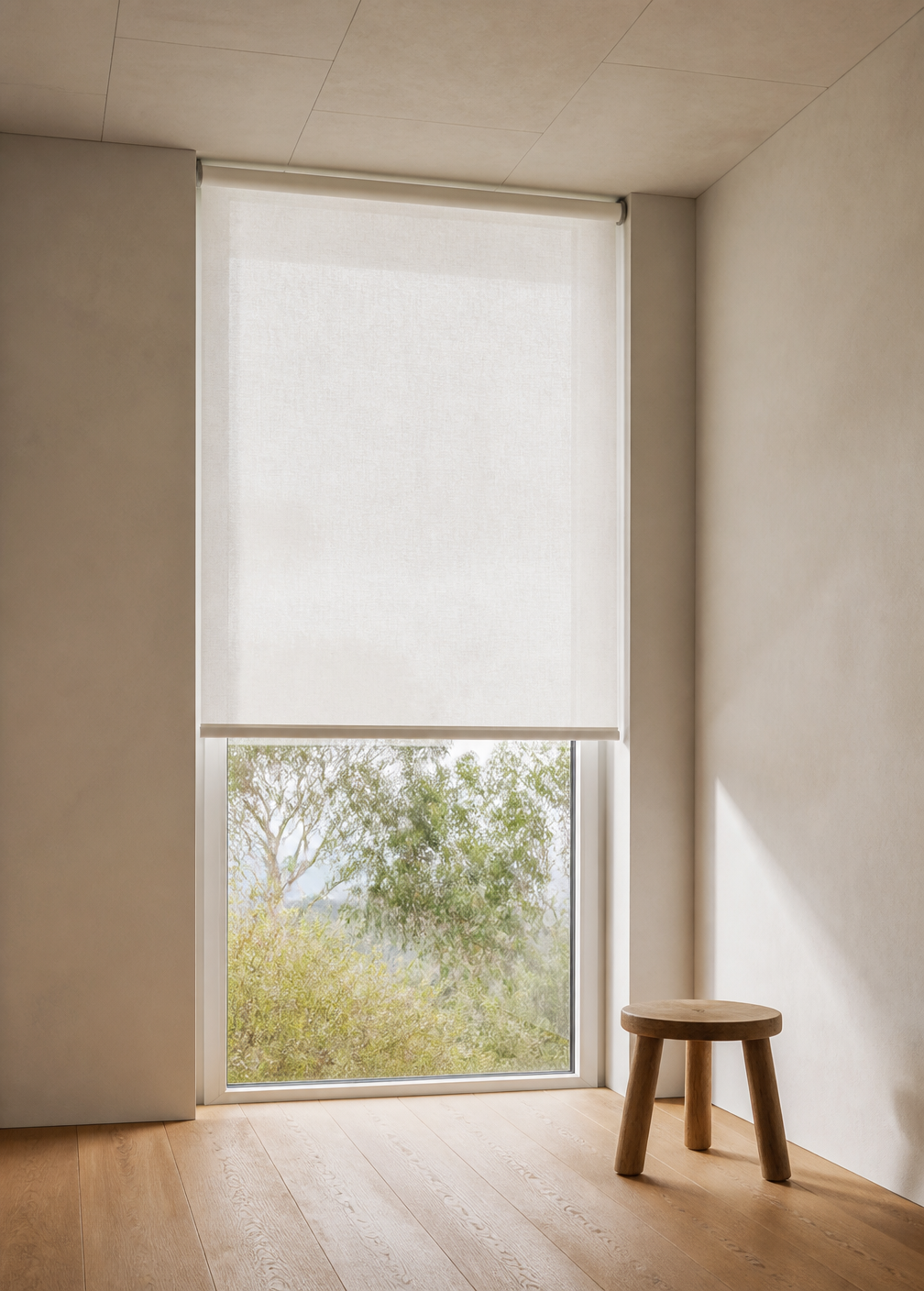
Roller blinds earn their keep in kitchens, bathrooms, laundries and utility rooms where a curtain isn't practical, and behind a sheer or a curtain in living rooms as a working layer for heat and glare. They're the quiet answer on rentals, kids' rooms and any window where one clean fitting is the whole brief. On bedrooms we pair a back-roll blockout with a sheer in front, or specify a curtain instead. The roller is the workhorse; where it wins is where you need the job done without ceremony.
Where it belongs
Who it suits, and who it doesn't
Who it suits
- Kitchens, bathrooms, laundries and utility rooms where a curtain isn't practical
- Living rooms as a heat and glare cut behind a sheer or a curtain
- Street-facing living rooms where the blind is up most of the day
- Rentals and budget-conscious rooms where one clean fitting is the whole answer
Who it doesn't
- Bedrooms in sunscreen fabric on their own (you're visible at night)
- Very wide openings past the roller tube span, where a panel glide fits better
- Rooms that want a soft fabric read (a Roman blind or a curtain is warmer)
- Deep-reveal windows where the bracket geometry doesn't clear the frame
Questions Worth Asking
Frequently asked
What's the difference between blockout, sunscreen and light filter?
Blockout stops light through the cloth and is the choice for bedrooms. Sunscreen is a mesh: you see out during the day, and it takes the heat and glare off without going dark. Light filter softens daylight without seeing through, so it gives privacy day and night, but you can't see out. Different fabrics for different jobs, sometimes doubled up on the same window.
Front roll or back roll?
Front roll means the fabric comes off the front of the tube and hangs a little away from the glass. Back roll runs the fabric off the back and closer to the glass, which gives a tighter light seal on a blockout. We normally specify back roll for blockout in bedrooms, and front roll where the fabric print or texture is meant to be seen.
Chain, spring or motor?
Side chain is the standard: cheap, reliable, and safe when installed with a child-safety cleat. Motorised is worth it on hard-to-reach windows, wide blinds, or where a single button runs a whole room. Springs exist but are less common on made-to-measure. Plan the power for motors before plaster where you can.
Are Holland blinds the same as roller blinds?
Yes. Holland is the older name, roller is the current one, and the product is the same fabric-on-a-tube system. Most workrooms and installers still use both names interchangeably.
How wide can a single roller go?
There's a practical span before the tube starts to deflect in the middle and the fabric telegraphs a curve when lowered. Beyond that we split into two blinds on the same window, or move to a panel glide for a wider single covering.
Next Step
Book a free measure & consultation
A 15-minute phone call first. Then, if it's a fit, we come and measure your roller blinds and anything else you'd like specified at the same visit.
Book my free measure →