

The Studio · Curtains & Blinds
Curtains & blinds, properly specified
Made to measure on the Gold Coast. Designed for your room, not just your window.
The Centrepiece
What nobody tells you
This is the kind of thing we tell you before you order, because we design rooms, not just sell curtains.
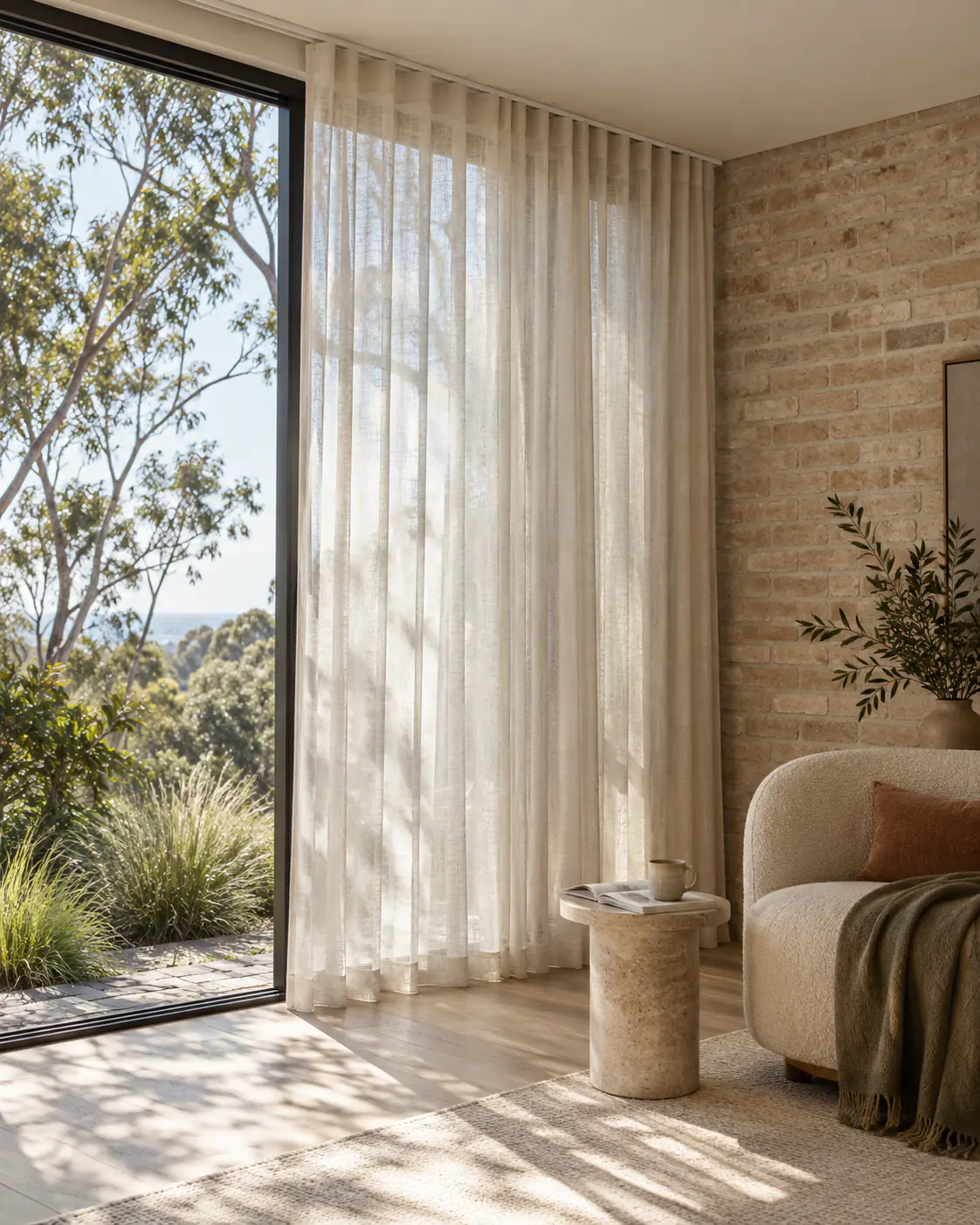
Every curtain style hangs from a track. What buyers rarely hear is that some styles leave the track visible, and some conceal it. Neither is wrong, but knowing which is which changes the room.
Where the curtain goes
Curtains need somewhere to stack
If the window runs wall to wall, there is no stack space. That is a conversation to have before anything is ordered.
The stack
Curtains need somewhere to go when they're open. We extend tracks past the window frame so the stack sits over the wall, not the glass. Daylight is not blocked, and the window looks its real size.
Sheer privacy reverses at night
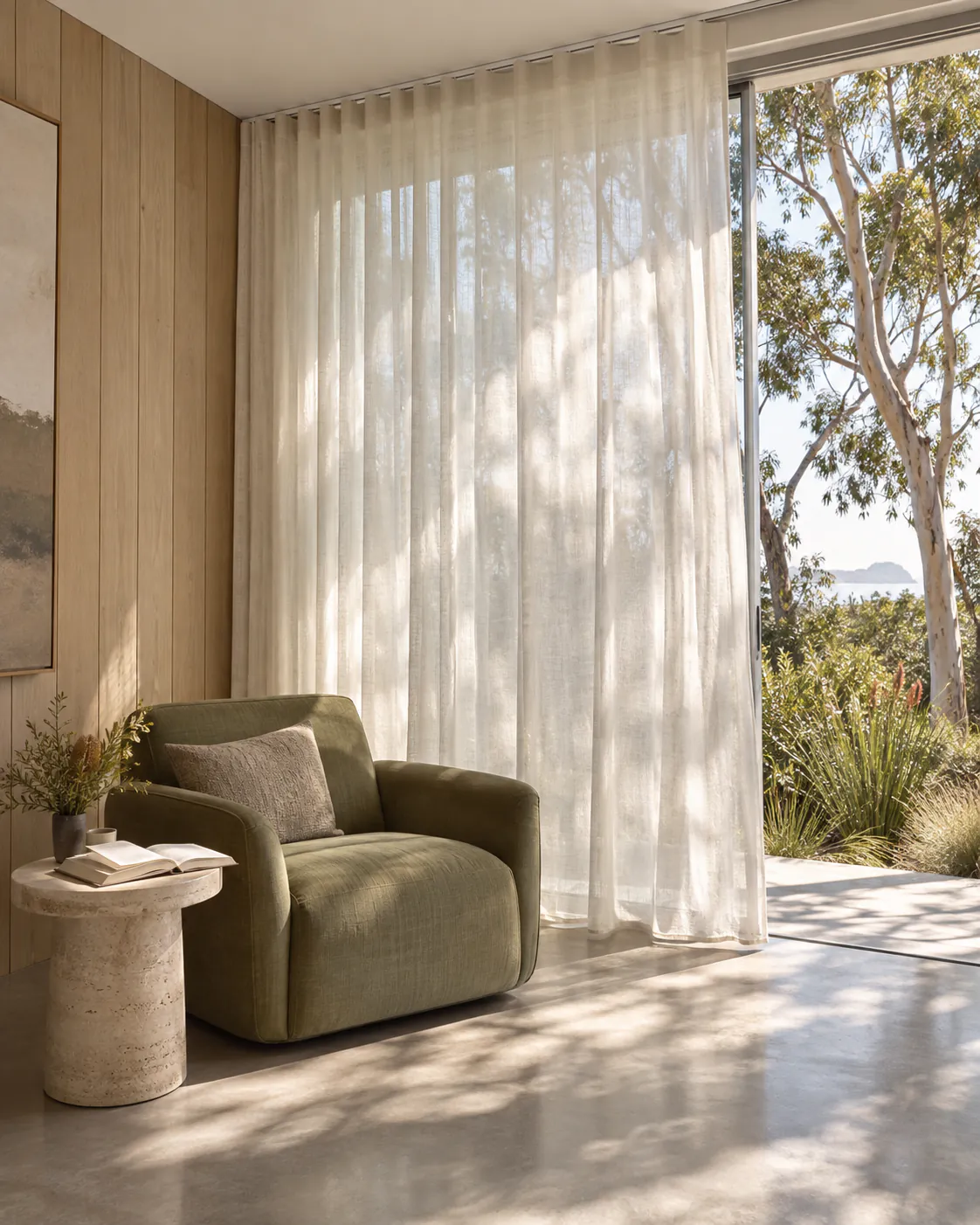
Sheers give daytime privacy while you can still see out. After dark, with lights on inside, that reverses. You're now visible from the street. Layer sheers with blockouts if you want privacy on both sides of the day.
Blockout ≠ blackout
Blockout fabric stops light through the cloth. True blackout stops the halo around the edges too, and that takes pelmets, deeper returns, or side channels. If you want a properly dark bedroom, we specify for it from the start.
Sheer-backed blockouts
Sheer face sewn to a blockout back on a single track. One curtain, one operation: softness by day, darkness by night. Not right for every room; excellent for bedrooms that want to look like living rooms.
There are a dozen more decisions like these. That's what the free measure is for.
Rules We Specify By
- “Wave fold is beautiful, as long as you know the track stays visible. Recess it, pelmet it, or choose a pleat that covers it.”
- “Sheers filter light; blockouts control it. Most rooms want both, layered.”
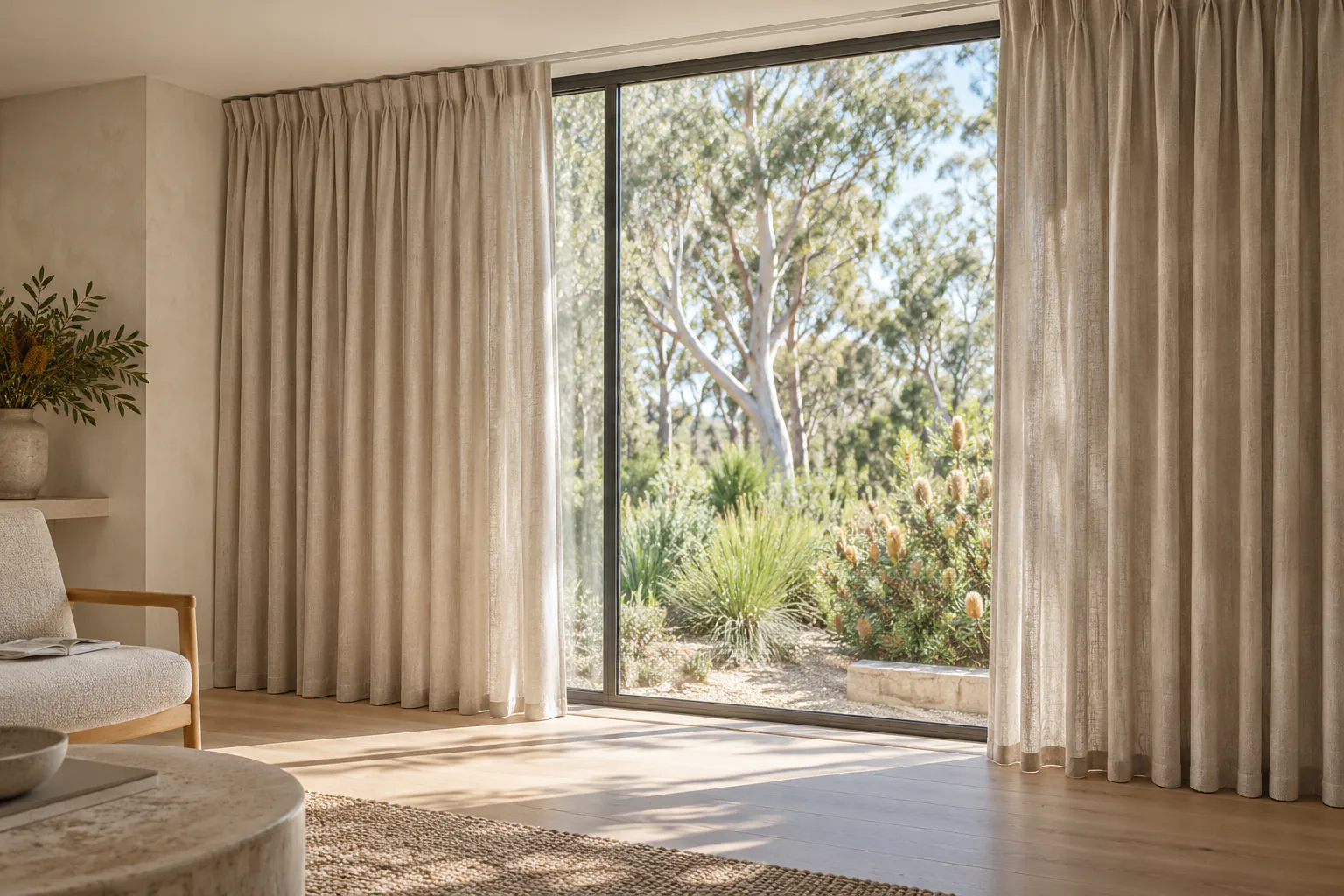
- “Curtains hang from the ceiling line, not the window frame. Height is what makes a room feel taller.”
- “The fabric decides the mood before the colour does.”
Blinds, honestly
A blind is one plane at the glass
A curtain is fabric plus fullness plus stack. A blind is a single flat plane hanging in front of, or inside, the window. Everything you'd call "light control" comes down to two things: the fabric you choose, and how tight it fits.
Three fabric families do most of the work. Blockout stops light through the cloth. Sunscreen lets you see out while cutting glare and heat. Light-filter sits between them, softening daylight without blacking a room out. The honest point is that fabric alone isn't the whole answer: a blockout blind is not a blackout room, because light escapes at the edges on a reveal fit, and no fabric choice fixes that.
Back roll vs front roll
Back roll (standard) hangs the fabric off the back of the tube, close to the glass. Tighter, cleaner, smaller edge gaps, better light and heat control. The catch: it can foul window handles, locks and shallow reveals. Front roll hangs the fabric off the front, clears obstructions and hides the tube (you see fabric and bottom rail only). It sits forward of the glass, so the edge gaps open up. This call is made before you order, not after.
Sunscreen reverses at night
A sunscreen roller lets you see out by day. Lights on inside after dark and it flips: you're now visible from the street. Fine in a kitchen or study, not fine on its own in a bedroom or bathroom. Layer it with a blockout if the room needs both.
Blockout blind ≠ blackout room
Blockout fabric stops light through the cloth. Light still runs down the sides on a reveal fit, and around the bottom rail. A properly dark bedroom needs a face-fit blind with side channels or a pelmet, or a blockout curtain layered over the top. Worth specifying from the start.
Different mechanism, same principle: this is a conversation to have before anything is ordered.
What We Do
Curtains & blinds, from sketch to install
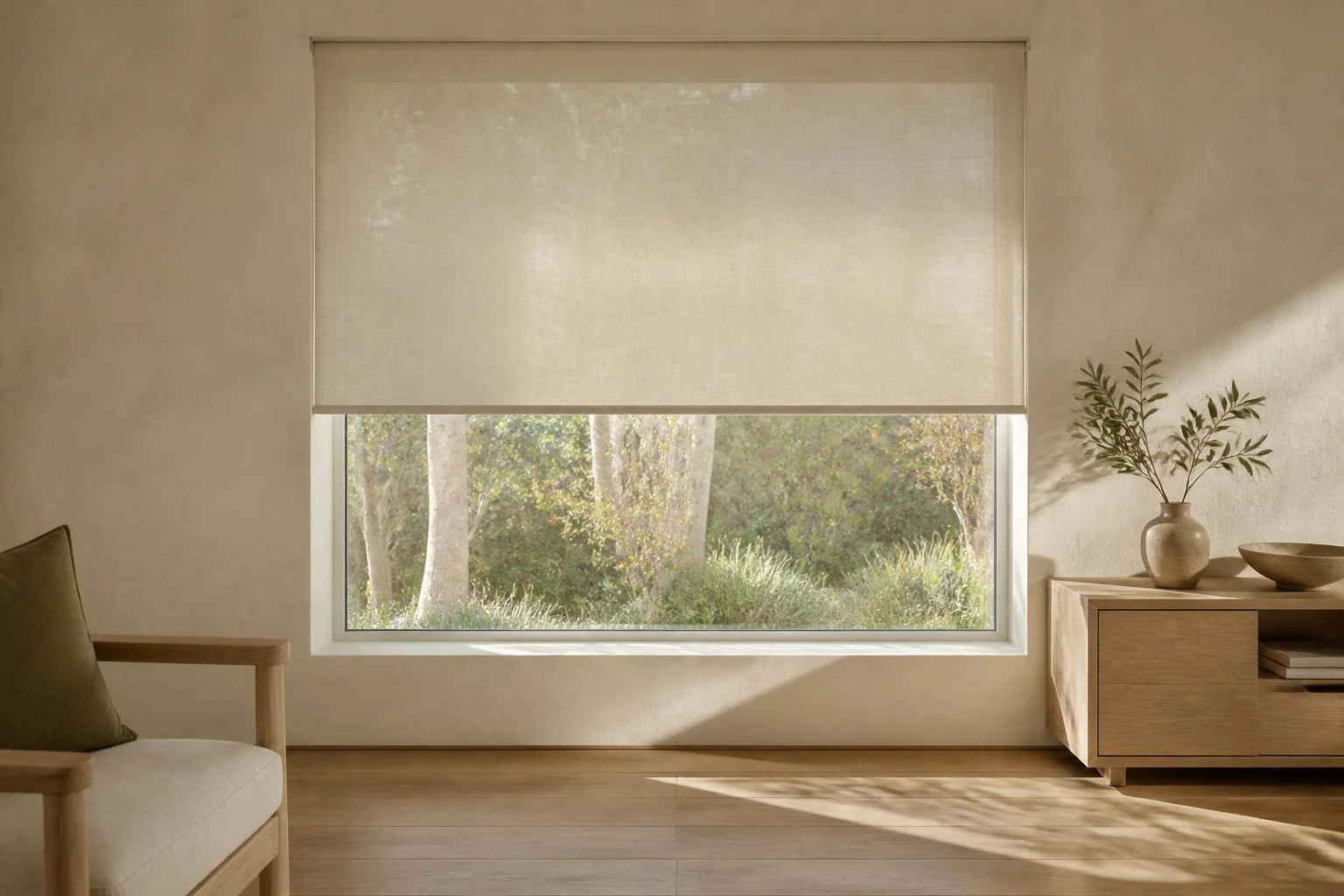
No product grid. Every job is specified from scratch after we've seen the room.
Made Locally
Made locally, installed with care
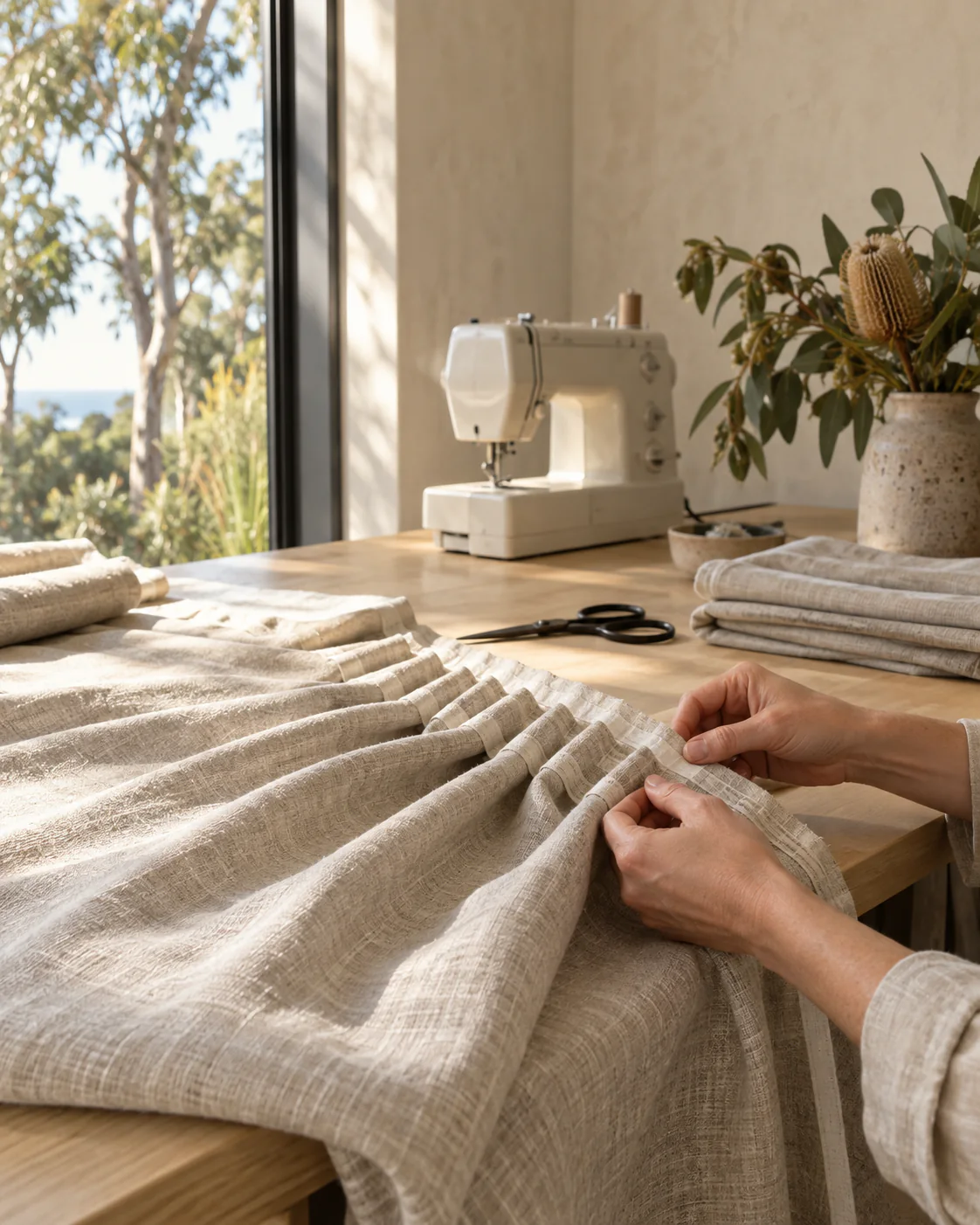
Designed by the Biku studio and made to measure in two specialist Gold Coast workrooms (one dedicated to curtains, one to blinds), then installed by trades we work with every week. Australian made. One point of contact from consultation to install.
How It Works
Three steps, one studio
01
Talk
A 15-minute call about your rooms, your light, and how you want to live in them.
02
Measure & specify
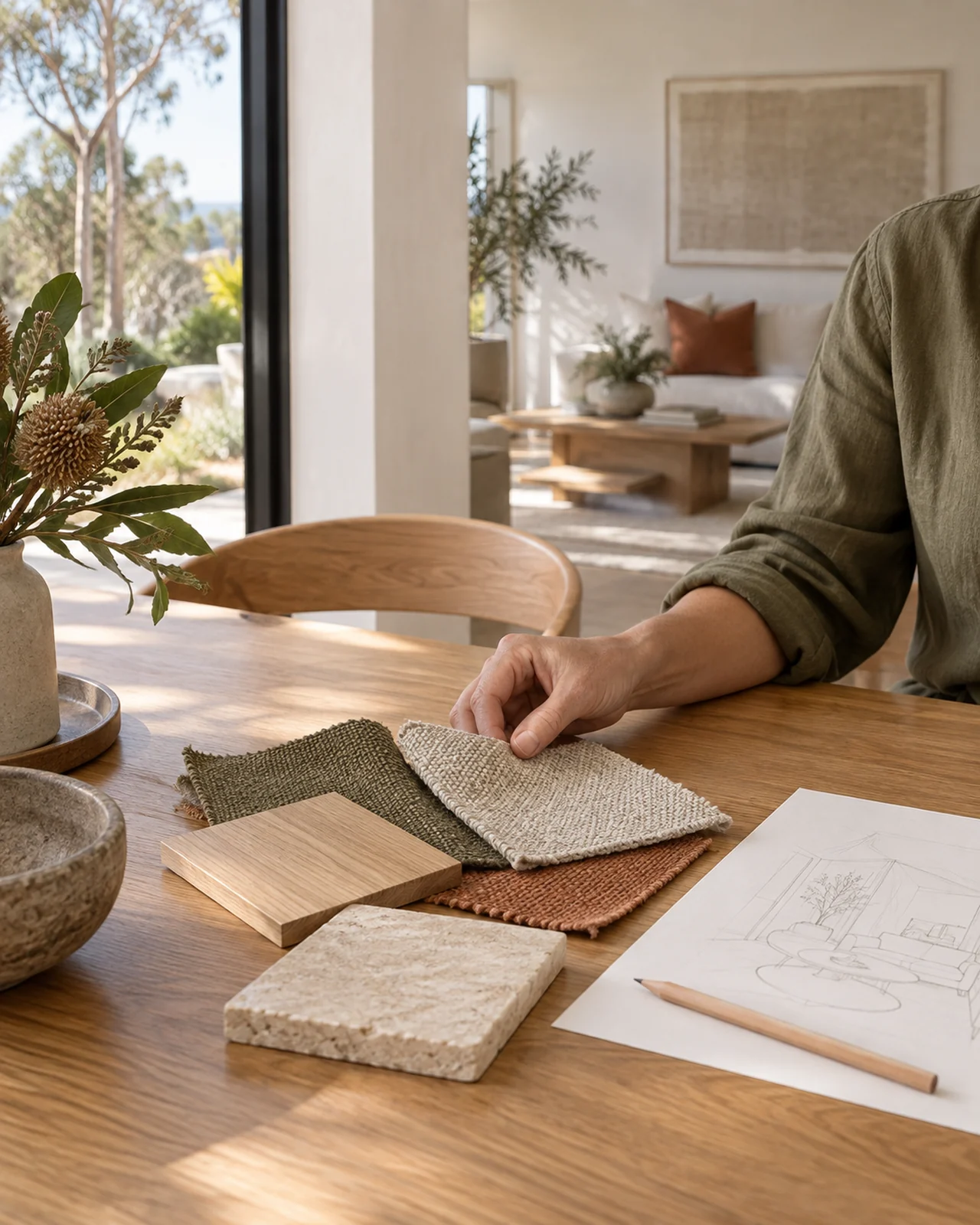
We come to the site, measure, walk you through fabrics and tracks, and give you the honest advice for your specific windows.
03
Made & installed
Local workrooms make to spec. We coordinate the install so you deal with us, not four suppliers.
Questions Worth Asking
Frequently asked
Yes. Every curtain and blind job starts with an on-site measure. It's how we get the specification right the first time. We look at ceiling heights, architraves, stack space, and how the light moves through the room.
The initial phone conversation and the on-site measure are complimentary. You're only committed once you approve a written specification.
Gold Coast and Brisbane routinely, Whitsundays / Mackay / Townsville as scheduled projects, and travel further afield for a fixed fee. Same trades, same standard.
Yes. Every curtain and blind we specify is made in one of two specialist Gold Coast workrooms: one curtains-only, one blinds-only. Both then installed locally.
The honest answer is that it depends on the room, and often the right answer is both. The deciding factor is usually stack space: curtains need somewhere to go when they're open. If the window runs wall-to-wall, or the furniture can't move away from it, curtains will always sit over the glass and blinds will serve the room better. Where there is stack space, curtains give you softness, height and insulation that blinds can't. We specify both, so we have no reason to push you either way.
Yes. Rollers, romans, venetians and panel glides, with motorisation available. We often layer blinds with curtains on the same window.
Reveal fit sits inside the window frame. Neat and architectural, but it leaves a gap of light down each side. Face fit mounts on the wall outside the frame and covers the whole opening. It's why a blockout roller in a reveal is never a dark room, and why we face-fit bedrooms almost every time. If the architecture calls for a reveal fit, we'll tell you what you're trading for it.
Three options. Float: 1–2cm above the floor, the cleanest look, best for daily use. Kiss: just touching the floor, tailored and calm. Puddle: 5–15cm of fabric on the floor, romantic and formal. We recommend based on the room, the traffic, and how often you have pets or kids walking through.
Yes. Holland blind is the older Australian name for a roller blind. Same product, different vintage of vocabulary.
No. Blockout fabric stops light through the cloth, but light escapes down the sides and around the bottom rail, especially on a reveal fit. A face-fit blind with side channels, a pelmet, or a layered blockout curtain closes those gaps. Worth specifying from the start.
Timber reads warmer, sits well in living rooms and bedrooms, and hides slat wear better; it's heavier and doesn't love a splash zone. Aluminium is lighter, tolerates humidity and cleaning, and suits bathrooms, laundries and utility rooms; it reads more functional. The room decides, not the price.
Back roll hangs the fabric close to the glass and sits tighter, with smaller edge gaps; it can foul window handles and shallow reveals. Front roll hangs the fabric off the front of the tube, clearing handles and hiding the tube, but sits forward of the glass and opens up bigger edge gaps. Decided before the order, not after.
Usually not. Panel glides are wide flat sections that stack to one side, or split to both. On a standard window the stacked panels eat into the glass in a way a curtain stack wouldn't. They shine on wide stackers, big sliders and room dividers, not on 1.2m windows.
Because every pleat style uses a different amount of fabric. Reverse pleat is roughly 2.0× window width, pinch pleat around 2.2–2.5×, and wave / S-fold around 2.5–3.0×. Same fabric, same window, very different final cost. The price you should compare is the finished curtain, not the metre.
Yes, on anything facing the sun. Our light is harsh and unlined face fabric fades and weakens faster than most people expect, particularly on west-facing glass. Lining isn't an upsell; it's what protects the fabric you chose. We look at which way each window faces before we recommend anything.
Corded window coverings are covered by mandatory safety standards in Australia, and every install we do meets them. In homes with young children we'll usually recommend a wand, a cordless option, or motorisation instead. It's a better outcome than a cord and a cleat on the wall.
There are a dozen more decisions like these. That's what the free measure is for.
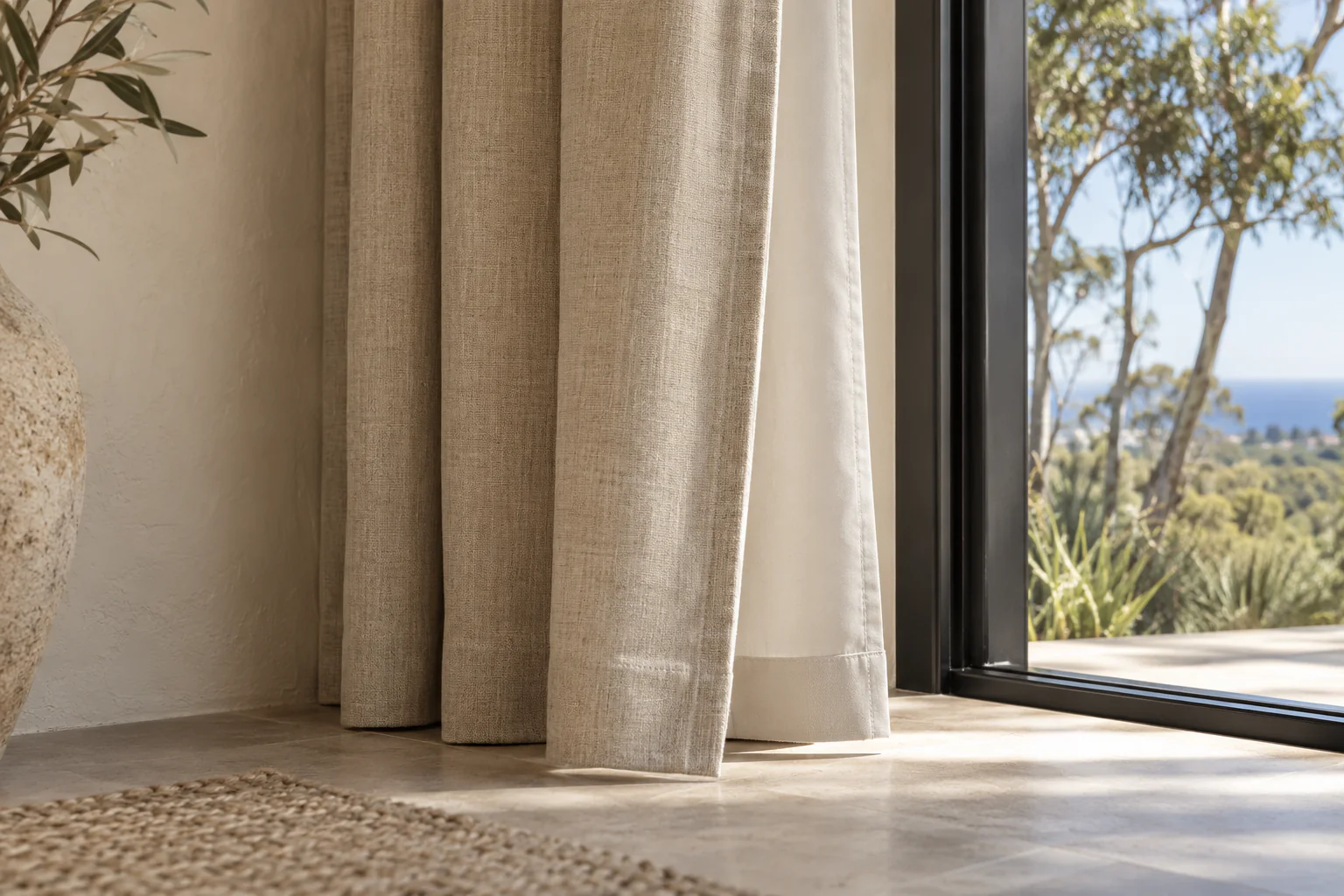
The hem line. A centimetre above the floor, kissing, or puddled. A decision we make together at the measure.
The Next Step
Book a free measure & consultation
A 15-minute phone call first. Then, if it's a fit, we come and measure.